
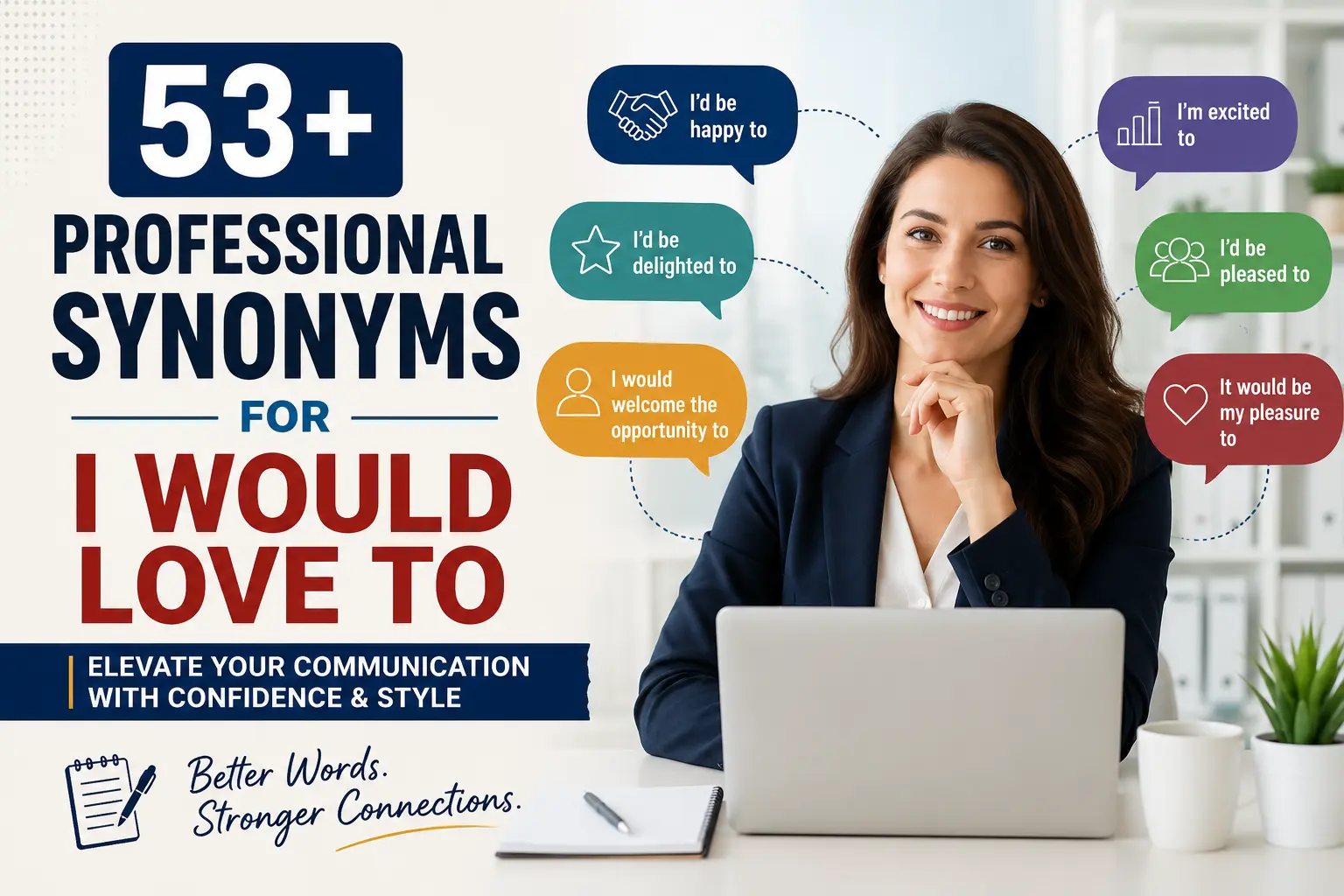
Words have the power to shape how people perceive your enthusiasm, professionalism, and confidence. While “I would love to” is a warm and friendly expression, using it repeatedly can make your communication feel predictable. Whether you’re writing a business email, responding to a client, networking with professionals, or simply chatting with colleagues, choosing the right alternative helps your message sound more polished and engaging.
Using professional synonyms for “I would love to” allows you to express willingness, excitement, appreciation, or commitment in a way that matches the situation. Some alternatives are ideal for formal workplace conversations, while others fit casual discussions or presentations. In this guide, you’ll discover over fifty professional expressions that can replace this common phrase, helping you communicate with greater confidence, variety, and authenticity.
What Does Professional Synonyms for I Would Love To Mean?
The phrase “I would love to” expresses a genuine desire or willingness to do something. It communicates enthusiasm while remaining polite and respectful.
People commonly use it when accepting invitations, volunteering for opportunities, expressing interest in projects, or showing appreciation for future collaboration.
Its emotional tone is positive, encouraging, and friendly. In professional settings, however, stronger or more refined alternatives may better reflect confidence, commitment, or professionalism.
When to Use It
You can use expressions similar to “I would love to” in many different situations, including workplace conversations, client communication, networking events, presentations, interviews, and casual discussions.
Examples include:
I would be delighted to discuss this proposal further.
Business Meeting
I’d be happy to contribute my ideas.
Interview
I would welcome the opportunity to join your team.
Networking
I’d appreciate the chance to connect.
Casual Conversation
I’d be excited to help with that.
These alternatives allow you to adjust your tone depending on the audience and purpose.
Is It Polite or Professional?
Yes. “I would love to” is both polite and positive. It shows willingness and appreciation without sounding demanding.
In casual conversations, it sounds warm and natural. In professional environments, however, certain alternatives such as “I would be delighted to,” “I would welcome the opportunity,” or “I’d be pleased to” often sound more polished and suitable for formal communication.
Selecting the right expression demonstrates professionalism while maintaining genuine enthusiasm.
1. I Would Be Delighted To
Meaning: Expresses sincere pleasure.
Tone: Formal and gracious.
Example: “I would be delighted to assist with your presentation.”
Explanation: Ideal for formal emails and client communication.
Purpose and Personalization: Shows appreciation while remaining professional.
2. I’d Be Happy To
Meaning: Willingly agrees.
Tone: Friendly and professional.
Example: “I’d be happy to answer your questions.”
Explanation: One of the most versatile alternatives.
3. I’d Be Pleased To
Meaning: Expresses satisfaction in helping.
Tone: Formal.
Example: “I’d be pleased to review the document.”
Explanation: Excellent for workplace communication.
4. I Would Welcome The Opportunity To
Meaning: Shows eagerness.
Tone: Professional.
Example: “I would welcome the opportunity to work with your team.”
Explanation: Frequently used in interviews and cover letters.
5. I’d Be Glad To
Meaning: Happy to participate.
Tone: Warm.
Example: “I’d be glad to explain the process.”
Explanation: Suitable for both business and casual conversations.
6. I’d Appreciate The Opportunity To
Meaning: Expresses gratitude in advance.
Tone: Respectful.
Example: “I’d appreciate the opportunity to present my ideas.”
Explanation: Common in professional requests.
7. I Would Enjoy
Meaning: Shows genuine interest.
Tone: Positive.
Example: “I would enjoy collaborating on this project.”
Explanation: Highlights enthusiasm naturally.
8. I Would Be Honored To
Meaning: Expresses respect.
Tone: Formal.
Example: “I would be honored to speak at your event.”
Explanation: Best for prestigious invitations.
9. I’m Eager To
Meaning: Shows excitement.
Tone: Motivational.
Example: “I’m eager to begin working with your company.”
Explanation: Demonstrates initiative.
10. I’m Excited To
Meaning: Shows enthusiasm.
Tone: Energetic.
Example: “I’m excited to contribute to this project.”
Explanation: Great for modern workplaces.
11. I’m Looking Forward To
Meaning: Expresses anticipation.
Tone: Professional.
Example: “I’m looking forward to our meeting.”
Explanation: Common in emails.
12. I’m Enthusiastic About
Meaning: Shows passion.
Tone: Positive.
Example: “I’m enthusiastic about joining your team.”
Explanation: Excellent during interviews.
13. I’d Welcome The Chance To
Meaning: Accepts an opportunity.
Tone: Professional.
Example: “I’d welcome the chance to discuss this further.”
Explanation: Sounds confident.
14. I’d Be More Than Happy To
Meaning: Strong willingness.
Tone: Friendly.
Example: “I’d be more than happy to assist.”
Explanation: Adds warmth.
15. I Would Certainly Like To
Meaning: Polite interest.
Tone: Formal.
Example: “I would certainly like to participate.”
Explanation: Appropriate in business settings.
16. I’d Be Thrilled To
Meaning: Very enthusiastic.
Tone: Excited.
Example: “I’d be thrilled to join your initiative.”
Explanation: Shows strong excitement.
17. I’d Appreciate Being Able To
Meaning: Respectful request.
Tone: Formal.
Example: “I’d appreciate being able to contribute.”
Explanation: Sounds courteous.
18. I’d Be Grateful For The Opportunity To
Meaning: Shows appreciation.
Tone: Professional.
Example: “I’d be grateful for the opportunity to interview.”
Explanation: Suitable for job applications.
19. I Would Welcome The Privilege Of
Meaning: Expresses honor.
Tone: Very formal.
Example: “I would welcome the privilege of serving your organization.”
Explanation: Best for official occasions.
20. I’m Keen To
Meaning: Interested.
Tone: Friendly.
Example: “I’m keen to hear your thoughts.”
Explanation: Popular in British English.
21. I’d Be Interested In
Meaning: Shows curiosity.
Tone: Professional.
Example: “I’d be interested in learning more.”
Explanation: Great for networking.
22. I’d Be Delighted To Participate
Meaning: Happy to join.
Tone: Formal.
Example: “I’d be delighted to participate in the workshop.”
Explanation: Perfect for invitations.
23. I’m Ready To
Meaning: Prepared.
Tone: Confident.
Example: “I’m ready to begin immediately.”
Explanation: Shows commitment.
24. I’m Prepared To
Meaning: Willing and capable.
Tone: Professional.
Example: “I’m prepared to take on additional responsibilities.”
Explanation: Demonstrates reliability.
25. I’d Welcome Your Invitation To
Meaning: Appreciates an invitation.
Tone: Formal.
Example: “I’d welcome your invitation to collaborate.”
Explanation: Courteous response.
26. I Would Be Excited To
Meaning: Strong enthusiasm.
Tone: Friendly.
Example: “I would be excited to join the event.”
Explanation: Keeps communication energetic.
27. I Would Appreciate The Chance To
Meaning: Respectful interest.
Tone: Formal.
Example: “I would appreciate the chance to contribute.”
Explanation: Excellent for interviews.
28. I Would Value The Opportunity To
Meaning: Shows appreciation.
Tone: Professional.
Example: “I would value the opportunity to work together.”
Explanation: Builds credibility.
29. I’m Motivated To
Meaning: Shows determination.
Tone: Professional.
Example: “I’m motivated to deliver excellent results.”
Explanation: Demonstrates ambition.
30. I’d Welcome The Possibility Of
Meaning: Open to opportunities.
Tone: Formal.
Example: “I’d welcome the possibility of future collaboration.”
Explanation: Ideal for networking.
31. I’m Delighted To
Meaning: Very pleased.
Tone: Warm.
Example: “I’m delighted to accept your invitation.”
Explanation: Positive and elegant.
32. I’d Cherish The Opportunity To
Meaning: Deep appreciation.
Tone: Formal.
Example: “I’d cherish the opportunity to learn from your team.”
Explanation: Adds sincerity.
33. I’d Love The Opportunity To
Meaning: Strong interest.
Tone: Friendly.
Example: “I’d love the opportunity to contribute.”
Explanation: Slightly more professional than the original phrase.
34. I’m Honored To
Meaning: Feels privileged.
Tone: Respectful.
Example: “I’m honored to be selected.”
Explanation: Suitable for recognition.
35. I’d Welcome The Experience Of
Meaning: Open to learning.
Tone: Professional.
Example: “I’d welcome the experience of leading this project.”
Explanation: Highlights growth.
36. I’m Passionate About
Meaning: Deep interest.
Tone: Motivational.
Example: “I’m passionate about helping clients succeed.”
Explanation: Great for interviews.
37. I’d Like To Contribute
Meaning: Wants to help.
Tone: Professional.
Example: “I’d like to contribute my expertise.”
Explanation: Direct and effective.
38. I’m Willing To
Meaning: Ready to assist.
Tone: Neutral.
Example: “I’m willing to support the team.”
Explanation: Shows cooperation.
39. I’m Committed To
Meaning: Shows dedication.
Tone: Professional.
Example: “I’m committed to delivering quality work.”
Explanation: Strong for leadership.
40. I’d Be Proud To
Meaning: Shows pride.
Tone: Inspirational.
Example: “I’d be proud to represent the company.”
Explanation: Demonstrates loyalty.
41. I Would Be Privileged To
Meaning: Feels honored.
Tone: Formal.
Example: “I would be privileged to serve on the committee.”
Explanation: Best for official roles.
42. I’d Welcome The Responsibility To
Meaning: Accepts responsibility.
Tone: Professional.
Example: “I’d welcome the responsibility to lead the project.”
Explanation: Shows confidence.
43. I’m Happy To Help
Meaning: Offers assistance.
Tone: Friendly.
Example: “I’m happy to help whenever needed.”
Explanation: Common in customer service.
44. I’d Enjoy The Opportunity To
Meaning: Finds value in the task.
Tone: Warm.
Example: “I’d enjoy the opportunity to mentor new employees.”
Explanation: Positive and approachable.
45. I’d Be Excited About
Meaning: Strong interest.
Tone: Energetic.
Example: “I’d be excited about joining your initiative.”
Explanation: Encouraging tone.
46. I’m Looking Forward To Contributing
Meaning: Anticipates involvement.
Tone: Professional.
Example: “I’m looking forward to contributing to the discussion.”
Explanation: Common in business communication.
47. I’d Welcome Your Feedback
Meaning: Invites discussion.
Tone: Respectful.
Example: “I’d welcome your feedback on this proposal.”
Explanation: Encourages collaboration.
48. I’m Ready And Willing To
Meaning: Fully prepared.
Tone: Confident.
Example: “I’m ready and willing to assist the team.”
Explanation: Shows dedication.
49. I’d Appreciate Being Included
Meaning: Wants participation.
Tone: Polite.
Example: “I’d appreciate being included in future meetings.”
Explanation: Respectful request.
50. I’m Delighted To Accept
Meaning: Accepts happily.
Tone: Formal.
Example: “I’m delighted to accept your invitation.”
Explanation: Perfect for official replies.
51. I’d Welcome The Opportunity For Collaboration
Meaning: Interested in teamwork.
Tone: Professional.
Example: “I’d welcome the opportunity for collaboration on future projects.”
Explanation: Excellent for networking.
52. I Am Pleased To Accept
Meaning: Accepts formally.
Tone: Business.
Example: “I am pleased to accept your proposal.”
Explanation: Suitable for corporate communication.
53. It Would Be My Pleasure To
Meaning: Offers help graciously.
Tone: Polite and elegant.
Example: “It would be my pleasure to assist you.”
Explanation: One of the most courteous professional alternatives.
54. I Would Be More Than Willing To
Meaning: Shows complete readiness.
Tone: Professional.
Example: “I would be more than willing to support your initiative.”
Explanation: Ideal when emphasizing commitment.
Conclusion
Choosing professional synonyms for “I would love to” helps make your communication more engaging, polished, and adaptable. Whether you’re writing emails, attending interviews, collaborating with colleagues, or speaking with clients, the right expression reflects both enthusiasm and professionalism. By expanding your vocabulary with these alternatives, you’ll avoid repetitive language while creating stronger connections with your audience. Try using different phrases naturally according to the situation, and you’ll notice your communication becoming more confident, effective, and memorable.
Discover more.