
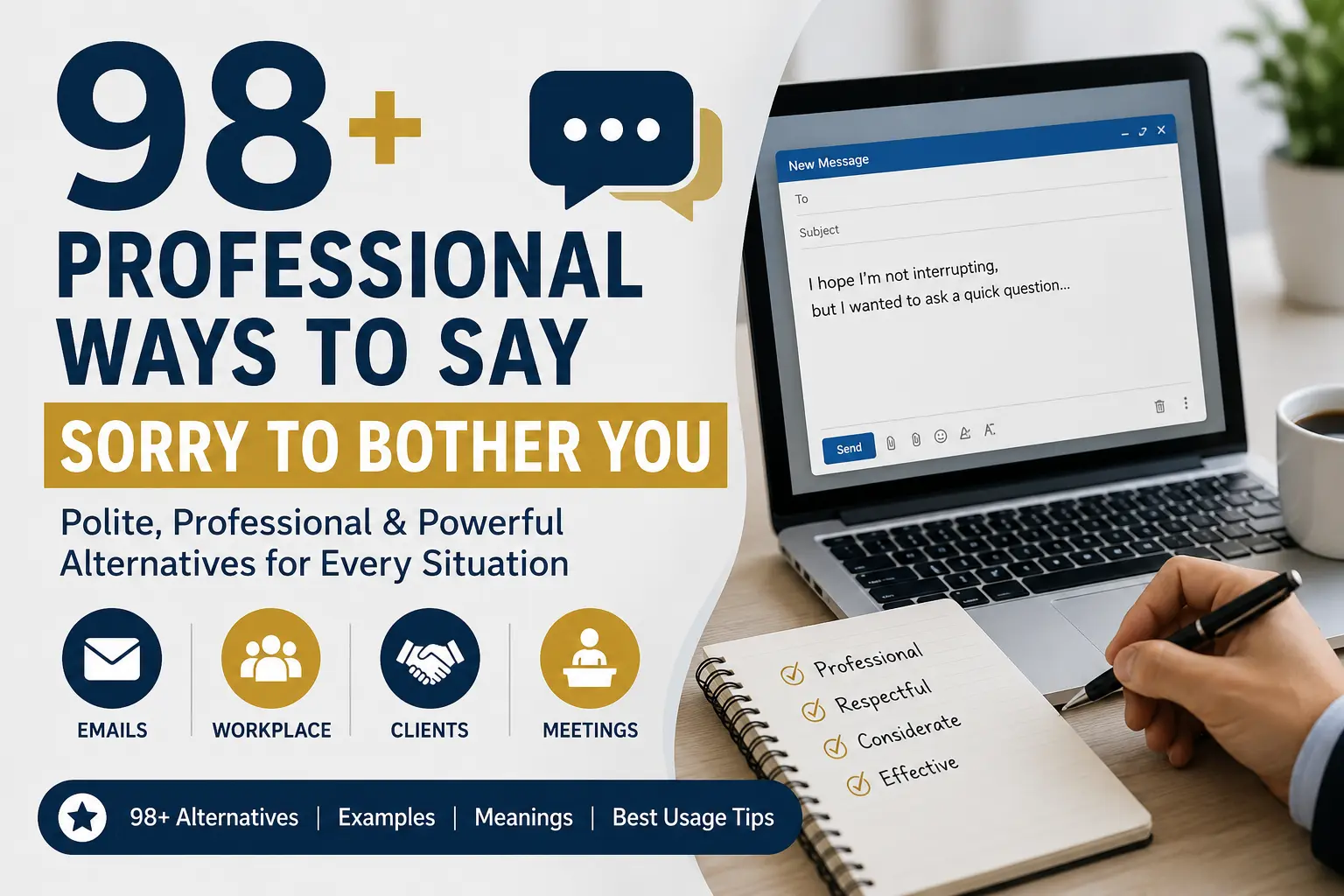
Have you ever needed someone’s attention but worried about interrupting them? The phrase “sorry to bother you” is one of the most common ways to politely acknowledge that you’re asking for someone’s time. While it is respectful, repeating the same expression in every email or conversation can make your communication feel predictable. Learning a variety of professional alternatives helps you sound more confident, thoughtful, and engaging. Whether you’re writing a business email, speaking with a client, messaging a colleague, or asking a teacher for assistance, choosing the right phrase creates a positive impression. In this guide, you’ll discover 98+ professional ways to say sorry to bother you that suit different situations, tones, and relationships, allowing your communication to feel both courteous and authentic.
What Does “Sorry to Bother You” Mean?
The phrase “sorry to bother you” is a polite expression used before asking for someone’s attention, help, or time. It recognizes that the other person may be busy and shows respect for their schedule.
Its emotional tone is humble, considerate, and appreciative. Rather than demanding attention, it softens the request and makes the conversation feel more courteous.
People commonly use it in emails, phone calls, workplace conversations, customer service interactions, and everyday communication.
When to Use It
You can use this expression in many professional and personal situations, including:
Business emails requesting information.
Following up on projects or deadlines.
Asking a colleague for assistance.
Contacting a client with a question.
Speaking with a manager.
Messaging a professor or instructor.
Requesting customer support.
Casual conversations with friends.
Examples:
“I’m sorry to bother you, but could you review this report?”
“Sorry to bother you again. I just wanted to confirm tomorrow’s meeting.”
“I apologize for interrupting your day, but I have a quick question.”
Is It Polite or Professional?
Yes. “Sorry to bother you” is generally considered polite and professional. It demonstrates respect for another person’s time and shows that you understand they may be occupied.
However, overusing apologies can sometimes make your message sound less confident, especially when your request is reasonable. In many workplace situations, replacing it with a more confident yet courteous alternative creates a stronger impression while maintaining professionalism.
98+ Professional Ways to Say Sorry to Bother You
1. I hope I’m not interrupting
Meaning: A polite way to acknowledge someone’s time.
Tone: Professional
Example: “I hope I’m not interrupting, but could I ask a quick question?”
Explanation: Ideal for workplace conversations.
Purpose: Shows respect without excessive apology.
2. Excuse me for reaching out
Meaning: Politely introduces your message.
Tone: Formal
Example: “Excuse me for reaching out unexpectedly regarding the proposal.”
Explanation: Excellent for first emails.
3. I appreciate your time
Meaning: Expresses gratitude before asking.
Tone: Professional
Example: “I appreciate your time and would like your advice.”
Explanation: Positive and confident.
4. May I have a moment of your time?
Meaning: Requests attention politely.
Tone: Formal
Example: “May I have a moment of your time to discuss the report?”
Explanation: Suitable for meetings.
5. If you have a moment
Meaning: Respects availability.
Tone: Friendly
Example: “If you have a moment, I’d appreciate your feedback.”
Explanation: Sounds considerate.
6. When you have a chance
Meaning: No immediate urgency.
Tone: Professional
Example: “When you have a chance, could you review this file?”
Explanation: Great for emails.
7. Whenever it’s convenient
Meaning: Leaves timing flexible.
Tone: Polite
Example: “Whenever it’s convenient, I’d love your thoughts.”
Explanation: Shows patience.
8. I appreciate your attention
Meaning: Thanks someone in advance.
Tone: Formal
Example: “I appreciate your attention to this matter.”
Explanation: Excellent for business correspondence.
9. Would you mind helping me?
Meaning: Politely requests assistance.
Tone: Friendly
Example: “Would you mind helping me with this spreadsheet?”
Explanation: Soft and respectful.
10. May I ask for your assistance?
Meaning: Requests support.
Tone: Formal
Example: “May I ask for your assistance with this project?”
Explanation: Suitable for professional settings.
11. Could I ask a quick favor?
Meaning: Requests a small favor.
Tone: Friendly.
Example: “Could I ask a quick favor regarding today’s meeting?”
Explanation: Keeps the request light.
12. I’d appreciate your guidance
Meaning: Requests advice.
Tone: Professional.
Example: “I’d appreciate your guidance on this issue.”
Explanation: Ideal when seeking expertise.
13. I’d value your opinion
Meaning: Invites feedback.
Tone: Respectful.
Example: “I’d value your opinion before moving forward.”
Explanation: Makes others feel appreciated.
14. May I trouble you briefly?
Meaning: Traditional polite request.
Tone: Formal.
Example: “May I trouble you briefly for a signature?”
Explanation: Elegant business language.
15. Could you spare a minute?
Meaning: Requests a short amount of time.
Tone: Friendly.
Example: “Could you spare a minute to review this?”
Explanation: Common in workplaces.
16. If now is a good time
Meaning: Checks availability.
Tone: Professional.
Example: “If now is a good time, I’d like to discuss the budget.”
Explanation: Shows consideration.
17. Whenever you’re available
Meaning: Flexible request.
Tone: Polite.
Example: “Whenever you’re available, I’d like your feedback.”
Explanation: Perfect for busy professionals.
18. I know you’re busy
Meaning: Acknowledges workload.
Tone: Respectful.
Example: “I know you’re busy, so I’ll keep this brief.”
Explanation: Demonstrates empathy.
19. Thank you for your patience
Meaning: Appreciates someone’s understanding.
Tone: Professional.
Example: “Thank you for your patience while I explain.”
Explanation: Positive alternative.
20. I appreciate your understanding
Meaning: Thanks them before the request.
Tone: Formal.
Example: “I appreciate your understanding regarding this matter.”
Explanation: Useful in sensitive discussions.
21. May I ask something?
Meaning: Introduces a question politely.
Tone: Friendly.
Example: “May I ask something about the project timeline?”
Explanation: Direct yet courteous.
22. Could I get your input?
Meaning: Requests feedback.
Tone: Professional.
Example: “Could I get your input before submitting this?”
Explanation: Encourages collaboration.
23. Would you be able to help?
Meaning: Asks for assistance respectfully.
Tone: Friendly.
Example: “Would you be able to help me understand this?”
Explanation: Sounds appreciative.
24. May I request your feedback?
Meaning: Invites comments.
Tone: Formal.
Example: “May I request your feedback on the presentation?”
Explanation: Excellent in business writing.
25. Could I run something by you?
Meaning: Shares an idea.
Tone: Casual professional.
Example: “Could I run something by you before the meeting?”
Explanation: Great among colleagues.
26. Would you have a minute?
Meaning: Asks for a brief conversation.
Tone: Friendly.
Example: “Would you have a minute to discuss this?”
Explanation: Common workplace phrase.
27. I’d like your advice
Meaning: Requests expertise.
Tone: Respectful.
Example: “I’d like your advice on this proposal.”
Explanation: Builds rapport.
28. May I seek your opinion?
Meaning: Asks for professional insight.
Tone: Formal.
Example: “May I seek your opinion regarding the contract?”
Explanation: Excellent for senior professionals.
29. I’d appreciate your perspective
Meaning: Invites another viewpoint.
Tone: Professional.
Example: “I’d appreciate your perspective on this issue.”
Explanation: Encourages discussion.
30. Could you take a quick look?
Meaning: Requests a review.
Tone: Friendly.
Example: “Could you take a quick look at this document?”
Explanation: Useful in offices.
31. May I have your thoughts?
32. Would you kindly assist me?
33. If you don’t mind
34. When it’s convenient for you
35. Could I briefly ask
36. I would appreciate your help
37. May I check something with you?
38. Could you clarify something?
39. Would you mind if I asked
40. I’d appreciate a moment of your time
41. Could I ask for your expertise
42. If you’re available
43. May I ask a small favor
44. I’d love your feedback
45. Could I consult you
46. I’d appreciate your advice
47. Can I get your thoughts
48. I’d welcome your suggestions
49. Would you be willing to review this
50. May I ask for your opinion
51. If you could spare a moment
52. Would it be possible to ask
53. I have a quick question
54. Could I request your assistance
55. May I ask your guidance
56. Could I have your advice
57. I’d appreciate your expertise
58. Would you mind reviewing this
59. May I ask one thing
60. Could you help clarify
61. May I ask for your insight
62. I was hoping to ask
63. I’d appreciate your support
64. May I ask for a minute
65. Could I get your recommendation
66. Would you kindly review
67. May I ask a quick question
68. I value your expertise
69. Could I ask your recommendation
70. May I request your time
71. I hope this is a good time
72. Would now be convenient
73. May I interrupt briefly
74. I’d appreciate your consideration
75. Could I ask one quick thing
76. May I request a moment
77. I’d be grateful for your help
78. I’d appreciate your response
79. May I ask for your recommendation
80. Could you kindly advise
81. I’d appreciate hearing your thoughts
82. Would you kindly take a look
83. Could I request your opinion
84. I’d appreciate your insight
85. May I briefly speak with you
86. If you don’t mind my asking
87. I’d appreciate a quick review
88. Could I ask your advice
89. Would you mind taking a look
90. May I request your attention
91. Could I have your feedback
92. I’d appreciate your recommendations
93. Would you kindly let me know
94. Could you please advise
95. May I ask for clarification
96. I’d appreciate your assistance
97. May I request your help
98. Could I borrow a moment of your time
99. I hope you don’t mind me asking
Meaning: A courteous way to introduce a request.
Tone: Friendly and professional.
Example: “I hope you don’t mind me asking, but could you explain the process?”
Explanation: Softens requests while maintaining confidence.
Purpose: Excellent for emails, meetings, and everyday conversations.
Conclusion
Using thoughtful alternatives instead of repeatedly saying “sorry to bother you” makes your communication more polished, confident, and engaging. The right expression depends on your audience, relationship, and situation. Whether you’re writing professional emails, speaking with clients, or simply asking a friend for help, these alternatives help you sound respectful without over apologizing. Practice incorporating different phrases naturally, and you’ll build stronger, more effective communication in every setting.
Discover more.
polite ways to ask for an update in an email