
Introduction
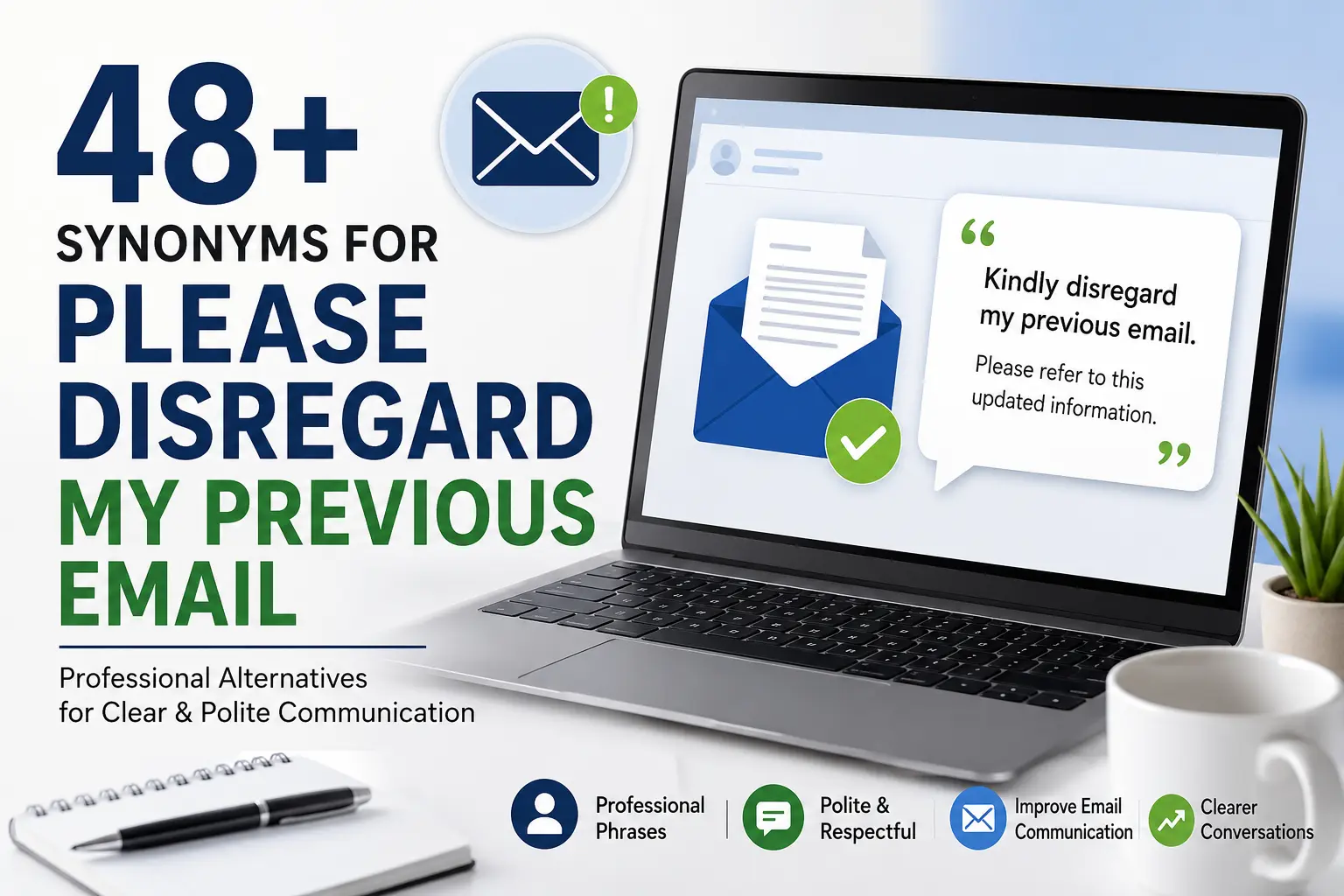
Everyone has sent an email they wished they could take back. Whether it contains outdated information, a missing attachment, a typo, or an incorrect message, knowing how to politely ask someone to ignore it is an essential communication skill. While the phrase “please disregard my previous email” is widely accepted, using different expressions can make your writing sound more professional, thoughtful, and natural.
Learning a variety of synonyms for please disregard my previous email helps you communicate with greater confidence in both personal and professional settings. Choosing the right wording also shows respect for your reader’s time while keeping your message clear and courteous. In this guide, you’ll discover more than 48 polished alternatives along with their meanings, tones, examples, and practical uses.
What Does Synonyms for Please Disregard My Previous Email Mean?
The phrase “please disregard my previous email” is used to politely ask the recipient to ignore an email that was sent by mistake or has become inaccurate because of updated information.
Its purpose is to prevent confusion and ensure the recipient follows the correct or most recent instructions.
The emotional tone is usually respectful, apologetic, and professional. Rather than drawing attention to the mistake, it simply redirects the recipient to the updated information in a courteous manner.
When to Use It
You can use these alternatives in many communication situations, including:
Business Emails
When you accidentally send incorrect information or forget an attachment.
Example: “Please ignore my previous email. I’ve attached the correct document.”
Workplace Communication
When updated instructions replace earlier ones.
Example: “Kindly disregard my earlier message. The meeting has been moved to Friday.”
Customer Service
When correcting previous information shared with clients.
Example: “Please disregard my previous email regarding pricing. The updated quote is attached.”
Academic Settings
When sending revised assignments or corrected information to teachers or classmates.
Example: “Please ignore my earlier submission and refer to the revised version.”
Casual Emails
When correcting information sent to friends or family.
Example: “Ignore my last email. I mixed up the dates.”
Is It Polite or Professional?
Yes. “Please disregard my previous email” is both polite and professional.
It is commonly used in business correspondence because it acknowledges the earlier message without placing blame or creating unnecessary explanations. However, depending on your audience, you can choose warmer or more formal alternatives.
Formal expressions work well for clients, managers, and executives, while casual alternatives fit conversations with coworkers, friends, or family members. Selecting the right phrase helps maintain professionalism while making your communication sound more natural.
48+ Other Ways to Say Please Disregard My Previous Email
1. Please Ignore My Previous Email
Meaning: Politely asks the reader to overlook the earlier message.
Tone: Professional
Example: Please ignore my previous email and refer to the updated information below.
Explanation: One of the most common alternatives for workplace communication.
Purpose and Personalization: Ideal when sending a corrected version immediately afterward.
2. Kindly Disregard My Earlier Message
Meaning: Requests that the previous message be ignored.
Tone: Formal
Example: Kindly disregard my earlier message as it contains outdated information.
Explanation: Suitable for clients and formal business correspondence.
3. Please Disregard My Last Email
Meaning: Refers specifically to the most recent email.
Tone: Professional
Example: Please disregard my last email. The attached file was incomplete.
Explanation: Short and direct.
4. Please Ignore My Earlier Email
Meaning: Politely asks readers to overlook the previous email.
Tone: Neutral
Example: Please ignore my earlier email and review this updated version.
Explanation: Appropriate for nearly every workplace.
5. Kindly Ignore My Previous Message
Meaning: Requests recipients not to consider the earlier communication.
Tone: Formal
Example: Kindly ignore my previous message due to an error.
Explanation: Works well for customer communication.
6. Please Refer to This Updated Email Instead
Meaning: Directs readers toward the corrected message.
Tone: Professional
Example: Please refer to this updated email instead for the correct schedule.
Explanation: Keeps attention on the latest information.
7. The Previous Email Is No Longer Applicable
Meaning: Indicates earlier information is outdated.
Tone: Formal
Example: The previous email is no longer applicable. Please follow the revised instructions.
Explanation: Useful for policy or procedure updates.
8. Please Consider This Email the Correct Version
Meaning: States this message replaces the earlier one.
Tone: Professional
Example: Please consider this email the correct version moving forward.
Explanation: Eliminates confusion.
9. My Earlier Email Contained Incorrect Information
Meaning: Acknowledges an error politely.
Tone: Honest
Example: My earlier email contained incorrect information. Please see the corrected details below.
Explanation: Shows accountability.
10. Please Accept This Updated Information
Meaning: Requests readers to rely on new details.
Tone: Professional
Example: Please accept this updated information as the final version.
Explanation: Ideal for revisions.
11. Please Treat This Email as the Correct One
Meaning: Replaces the previous message.
Tone: Formal
Example: Please treat this email as the correct one.
Explanation: Suitable for official communication.
12. My Previous Message Was Sent in Error
Meaning: Explains the earlier email was accidental.
Tone: Formal
Example: My previous message was sent in error. Kindly disregard it.
Explanation: Professional and concise.
13. Please Ignore the Earlier Version
Meaning: Refers to an outdated email.
Tone: Professional
Example: Please ignore the earlier version and review the attached document.
Explanation: Helpful when sharing revised files.
14. The Earlier Email Has Been Superseded
Meaning: Indicates it has been replaced.
Tone: Highly Formal
Example: The earlier email has been superseded by this update.
Explanation: Common in corporate settings.
15. Please Use This Email as Your Reference
Meaning: Directs recipients toward the latest information.
Tone: Professional
Example: Please use this email as your reference going forward.
Explanation: Keeps everyone aligned.
16. Kindly Disregard the Earlier Instructions
Meaning: Withdraws previous guidance.
Tone: Formal
Example: Kindly disregard the earlier instructions and follow these steps instead.
Explanation: Best for updated procedures.
17. Please Overlook My Earlier Email
Meaning: Politely asks readers not to consider it.
Tone: Friendly
Example: Please overlook my earlier email. It included the wrong attachment.
Explanation: Softer wording.
18. Please Ignore the Previous Communication
Meaning: Applies to emails or messages.
Tone: Formal
Example: Please ignore the previous communication regarding the event.
Explanation: Broad and versatile.
19. The Information Has Been Updated
Meaning: Indicates changes have been made.
Tone: Professional
Example: The information has been updated. Please refer to this email.
Explanation: Focuses on the correction.
20. Please Disregard the Earlier Notice
Meaning: Withdraws a prior notification.
Tone: Formal
Example: Please disregard the earlier notice due to scheduling changes.
Explanation: Useful for announcements.
21. Kindly Refer to the Corrected Version
Meaning: Directs readers to the revision.
Tone: Professional
Example: Kindly refer to the corrected version attached.
Explanation: Excellent for document revisions.
22. Please Follow This Updated Information
Meaning: Encourages readers to use new details.
Tone: Professional
Example: Please follow this updated information for all future actions.
Explanation: Clear and effective.
23. The Previous Details Were Incorrect
Meaning: Explains an error.
Tone: Honest
Example: The previous details were incorrect. Here are the revised figures.
Explanation: Appropriate for corrections.
24. Please Use the Revised Information
Meaning: Replaces outdated content.
Tone: Professional
Example: Please use the revised information from this email.
Explanation: Great for workplace communication.
25. Kindly Ignore My Earlier Correspondence
Meaning: Withdraws a previous email.
Tone: Formal
Example: Kindly ignore my earlier correspondence regarding the proposal.
Explanation: Ideal for formal business writing.
26. Please Treat My Earlier Email as Void
Meaning: Cancels the earlier message.
Tone: Formal
Example: Please treat my earlier email as void.
Explanation: Common in legal and administrative settings.
27. The Previous Email Can Be Disregarded
Meaning: States it is no longer valid.
Tone: Professional
Example: The previous email can be disregarded.
Explanation: Short and effective.
28. Please Review the Corrected Message
Meaning: Requests attention to updated content.
Tone: Professional
Example: Please review the corrected message below.
Explanation: Helpful after fixing mistakes.
29. This Email Replaces the Previous One
Meaning: Official replacement.
Tone: Professional
Example: This email replaces the previous one in its entirety.
Explanation: Clear and authoritative.
30. Please Note the Following Correction
Meaning: Introduces revised information.
Tone: Professional
Example: Please note the following correction regarding the schedule.
Explanation: Useful for announcements.
31. Please Disregard the Earlier Update
Meaning: Withdraws an update.
Tone: Professional
Example: Please disregard the earlier update due to recent changes.
Explanation: Good for changing circumstances.
32. The Earlier Information Is Outdated
Meaning: Explains why a correction is necessary.
Tone: Neutral
Example: The earlier information is outdated. Please refer to this version.
Explanation: Focuses on accuracy.
33. Please Refer to the Latest Version
Meaning: Guides readers toward the newest information.
Tone: Professional
Example: Please refer to the latest version attached.
Explanation: Perfect for revised files.
34. Please Ignore My Earlier Submission
Meaning: Withdraws previously submitted content.
Tone: Professional
Example: Please ignore my earlier submission and review this updated copy.
Explanation: Great for assignments and reports.
35. My Earlier Email Should Be Disregarded
Meaning: Politely invalidates the previous message.
Tone: Formal
Example: My earlier email should be disregarded.
Explanation: Suitable for official communication.
36. Please Accept My Revised Email
Meaning: Introduces corrected information.
Tone: Professional
Example: Please accept my revised email as the final version.
Explanation: Useful after correcting errors.
37. Please Read This Email Instead
Meaning: Redirects attention.
Tone: Friendly
Example: Please read this email instead because it contains the latest details.
Explanation: Simple and conversational.
38. The Earlier Message Is No Longer Valid
Meaning: Cancels previous information.
Tone: Formal
Example: The earlier message is no longer valid.
Explanation: Excellent for policy changes.
39. Please Consider the Earlier Email Withdrawn
Meaning: Officially retracts the email.
Tone: Formal
Example: Please consider the earlier email withdrawn.
Explanation: Strong formal wording.
40. Please Ignore My Previous Correspondence
Meaning: Withdraws earlier communication.
Tone: Professional
Example: Please ignore my previous correspondence regarding this matter.
Explanation: Suitable for legal or business writing.
41. Kindly Accept This Correction
Meaning: Presents updated information.
Tone: Formal
Example: Kindly accept this correction and proceed accordingly.
Explanation: Polite and respectful.
42. This Is the Correct Information
Meaning: Confirms the latest details.
Tone: Professional
Example: This is the correct information regarding tomorrow’s meeting.
Explanation: Clear and confident.
43. Please Replace the Earlier Email with This One
Meaning: Requests recipients to keep the updated version.
Tone: Professional
Example: Please replace the earlier email with this one.
Explanation: Excellent for revised documents.
44. Please Use This Revised Message
Meaning: Introduces corrected communication.
Tone: Professional
Example: Please use this revised message for future reference.
Explanation: Simple and effective.
45. Kindly Disregard the Previous Version
Meaning: Withdraws outdated content.
Tone: Formal
Example: Kindly disregard the previous version attached.
Explanation: Appropriate for documents.
46. The Earlier Email Was Mistakenly Sent
Meaning: Explains the cause.
Tone: Professional
Example: The earlier email was mistakenly sent. Please disregard it.
Explanation: Honest and transparent.
47. Please Ignore the Incorrect Email
Meaning: Identifies the mistaken message.
Tone: Neutral
Example: Please ignore the incorrect email and review this update.
Explanation: Useful when multiple emails exist.
48. Please Follow This Corrected Update
Meaning: Encourages recipients to use new information.
Tone: Professional
Example: Please follow this corrected update moving forward.
Explanation: Suitable for team communication.
49. This Message Supersedes My Previous Email
Meaning: Officially replaces the earlier email.
Tone: Highly Professional
Example: This message supersedes my previous email regarding the project timeline.
Explanation: Ideal for executive and corporate communication.
Conclusion
Using different synonyms for please disregard my previous email allows you to communicate corrections with greater clarity, professionalism, and confidence. Whether you’re writing to clients, colleagues, professors, or friends, choosing the right expression helps maintain credibility while reducing confusion. By expanding your email vocabulary, you can make every correction sound natural, respectful, and purposeful. Try incorporating these alternatives into your daily communication to create emails that feel polished, thoughtful, and reader friendly.
Discover more.
professional ways to say this is to inform you