
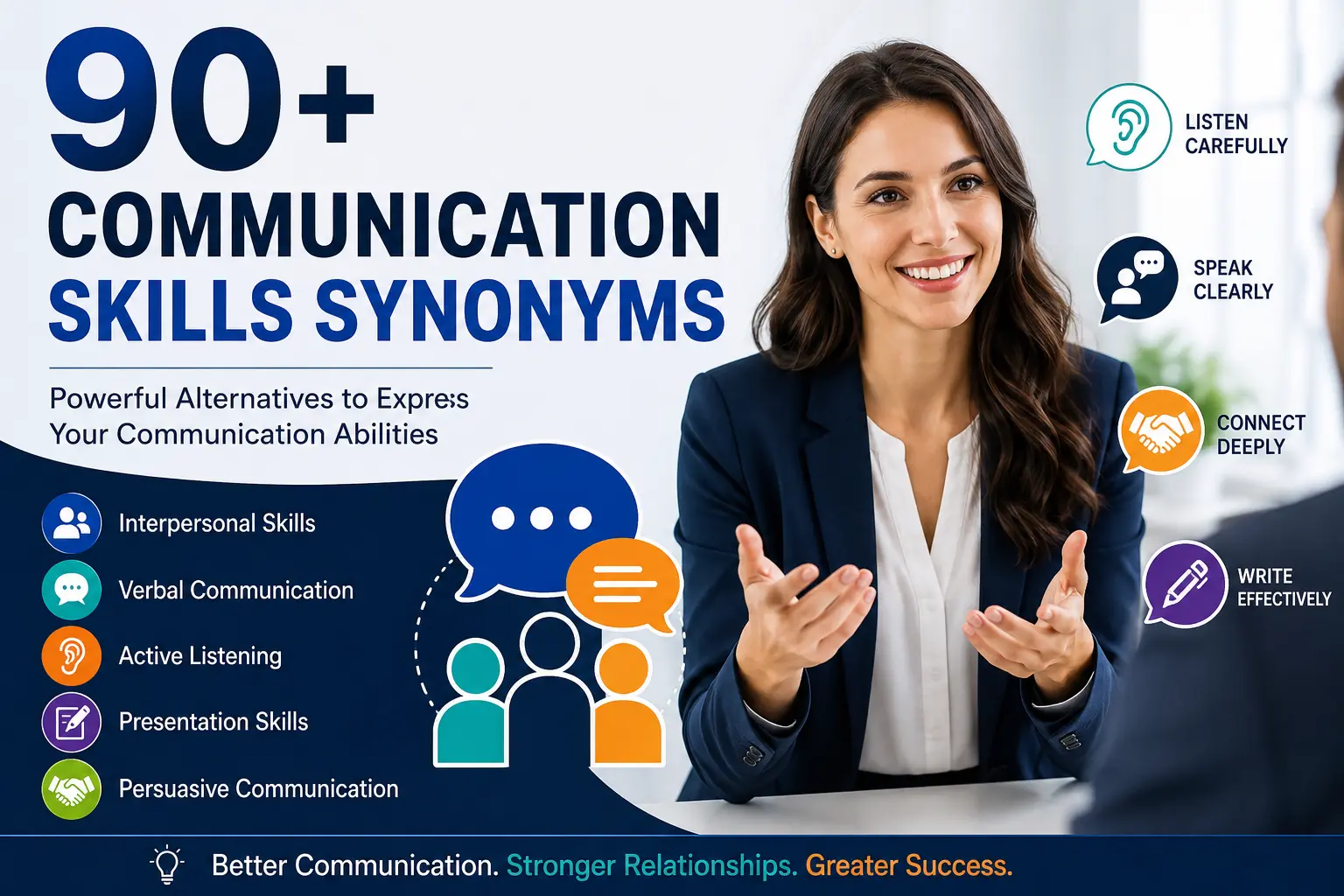
Strong communication is more than simply exchanging words. It is the ability to express ideas clearly, listen thoughtfully, understand others, and build meaningful connections. The phrase “communication skills” refers to the abilities people use to share information, emotions, opinions, instructions, and ideas effectively. In professional environments, these skills influence teamwork, leadership, customer relationships, presentations, interviews, and career growth. In everyday life, they help people avoid misunderstandings and create stronger personal relationships. However, repeatedly using the same expression can make your writing sound predictable. Learning communication skills synonyms gives you a richer vocabulary and helps you describe specific abilities with greater precision. Whether you are improving a resume, writing a professional profile, preparing a speech, or creating content, the right alternative can make your message more personal, polished, and effective.
Section 1: What Does “90+ Communication Skills Synonyms” Mean?
“Communication skills synonyms” refers to alternative words and phrases that describe the ability to communicate effectively. These alternatives can focus on specific aspects of communication, such as speaking, listening, writing, persuasion, collaboration, interpersonal interaction, or emotional understanding.
The phrase itself is mainly used when discussing professional development, resumes, workplace performance, education, leadership, and personal growth. Its tone is generally neutral and professional.
For example:
“Excellent communication skills are essential for effective teamwork.”
A more specific alternative could be:
“Strong interpersonal abilities are essential for effective teamwork.”
The second version gives readers a clearer idea of what kind of communication ability is being discussed.
Section 2: When to Use It
Communication skills synonyms are useful in many professional and personal contexts. Choosing the right expression depends on your audience, purpose, and the specific ability you want to emphasize.
On a Resume
Instead of repeatedly writing “excellent communication skills,” you can use phrases such as “strong verbal communication,” “effective interpersonal abilities,” or “advanced presentation skills.”
Example:
“Demonstrated strong interpersonal abilities while managing client relationships.”
In Cover Letters
More personalized language can make a cover letter sound confident and authentic.
Example:
“My ability to communicate complex information clearly allows me to work effectively with diverse teams.”
In Professional Emails
Professional communication alternatives can make workplace correspondence sound polished.
Example:
“Her clear articulation of project requirements helped the team move forward efficiently.”
In Speeches and Presentations
Terms such as “public speaking ability,” “presentation expertise,” and “persuasive communication” work well when discussing speaking skills.
Example:
“His persuasive communication encouraged the audience to support the proposed initiative.”
In Academic Writing
Formal alternatives such as “interpersonal competence,” “verbal proficiency,” and “written communication ability” can strengthen academic language.
In Casual Conversations
Simpler expressions such as “people skills,” “speaking ability,” and “ability to express yourself” sound natural in everyday communication.
Example:
“She has excellent people skills and makes everyone feel comfortable.”
Section 3: Is It Polite or Professional?
Yes. The phrase “communication skills” is both polite and highly professional. It is commonly used in resumes, interviews, performance reviews, job descriptions, educational settings, business reports, and professional conversations.
However, different synonyms create different impressions. “Interpersonal skills” sounds professional and broad, while “people skills” feels more conversational. “Verbal proficiency” sounds formal and academic, whereas “active listening” is specific and practical.
For business writing, choose precise expressions that match the skill you want to describe. Instead of saying someone simply has “good communication skills,” you might describe them as having “strong negotiation abilities,” “clear written expression,” or “exceptional presentation skills.”
This approach sounds more credible because it identifies the actual strength rather than relying on a general phrase.
Section 4: 90+ Communication Skills Synonyms
1. Interpersonal Skills
Meaning: The ability to interact effectively with other people.
Tone: Professional and versatile.
She demonstrated excellent interpersonal skills while working with international clients.
Use this when discussing relationship building, teamwork, or workplace interaction.
2. Communication Abilities
Meaning: The overall ability to exchange information clearly and effectively.
Tone: Neutral and professional.
His communication abilities have improved significantly since joining the organization.
This is a direct alternative to “communication skills.”
3. Verbal Communication
Meaning: The ability to communicate effectively through spoken language.
Tone: Formal and professional.
Her verbal communication is clear, confident, and engaging.
Use it when speaking ability is the main focus.
4. Written Communication
Meaning: The ability to express ideas effectively through writing.
Tone: Professional.
Excellent written communication is essential for this position.
This works particularly well on resumes and job applications.
5. People Skills
Meaning: The ability to interact comfortably and effectively with others.
Tone: Friendly and conversational.
His people skills make him an excellent customer service representative.
Use this for less formal professional contexts.
6. Interpersonal Competence
Meaning: The ability to communicate and build productive relationships with others.
Tone: Formal and advanced.
Her interpersonal competence contributes to a positive workplace environment.
This is suitable for academic and professional writing.
7. Verbal Proficiency
Meaning: Strong ability to use spoken language accurately and effectively.
Tone: Formal and academic.
The position requires a high level of verbal proficiency.
Use it when emphasizing language ability.
8. Expressive Ability
Meaning: The capacity to communicate thoughts, feelings, and ideas clearly.
Tone: Sophisticated and neutral.
His expressive ability makes his presentations particularly memorable.
This works well in creative and professional contexts.
9. Articulation Skills
Meaning: The ability to express ideas clearly and precisely.
Tone: Professional and polished.
Her articulation skills helped simplify a complicated proposal.
Use this when clarity and precision are important.
10. Presentation Skills
Meaning: The ability to communicate information effectively before an audience.
Tone: Professional.
Strong presentation skills helped him deliver the proposal confidently.
Ideal for resumes, interviews, and leadership profiles.
11. Listening Skills
Meaning: The ability to pay attention to and understand what others are saying.
Tone: Professional and practical.
Excellent listening skills help customer service representatives understand client concerns.
Use this when emphasizing receptive communication.
12. Active Listening
Meaning: A deliberate approach to listening, understanding, and responding thoughtfully.
Tone: Professional and motivational.
Active listening allowed the manager to address the employee’s concerns effectively.
This is especially useful in leadership and counseling contexts.
13. Persuasive Communication
Meaning: The ability to influence others through effective communication.
Tone: Professional and confident.
Her persuasive communication helped secure approval for the new strategy.
Use it in sales, marketing, leadership, and negotiation.
14. Effective Expression
Meaning: The ability to express thoughts in a clear and meaningful way.
Tone: Polished and professional.
Effective expression is essential when communicating complex ideas.
This is a useful broad alternative.
15. Clear Expression
Meaning: The ability to communicate ideas without unnecessary confusion.
Tone: Simple and professional.
His clear expression made the technical information easy to understand.
Use it when emphasizing clarity.
16. Professional Communication
Meaning: Communication that follows appropriate workplace standards.
Tone: Formal and business focused.
Professional communication is essential when dealing with clients.
This works well in workplace training content.
17. Communication Proficiency
Meaning: A high level of ability in communicating effectively.
Tone: Formal and advanced.
Her communication proficiency makes her well suited to leadership responsibilities.
Ideal for resumes and professional profiles.
18. Conversational Skills
Meaning: The ability to participate effectively in conversations.
Tone: Friendly and neutral.
Strong conversational skills help him connect naturally with customers.
Use this when discussing everyday verbal interaction.
19. Dialogue Skills
Meaning: The ability to participate in meaningful and productive dialogue.
Tone: Formal and thoughtful.
Good dialogue skills encourage constructive discussions.
Useful in education, leadership, and conflict resolution.
20. Social Communication Skills
Meaning: The ability to communicate appropriately in social situations.
Tone: Neutral and professional.
Social communication skills help employees build positive relationships.
This is useful when discussing social interaction.
21. Relationship Building Skills
Meaning: The ability to create and maintain productive relationships.
Tone: Professional and warm.
Her relationship building skills strengthened important client partnerships.
Ideal for sales, management, and networking.
22. Collaboration Skills
Meaning: The ability to communicate and work effectively with others.
Tone: Professional and modern.
Strong collaboration skills helped the team complete the project successfully.
Use it when communication is connected to teamwork.
23. Teamwork Skills
Meaning: The ability to cooperate effectively with colleagues.
Tone: Professional and approachable.
His teamwork skills contribute to a supportive working environment.
A strong resume alternative when working with groups.
24. Negotiation Skills
Meaning: The ability to communicate strategically to reach mutually beneficial agreements.
Tone: Professional and confident.
Her negotiation skills helped the company secure favorable terms.
Best for business, sales, and leadership contexts.
25. Diplomatic Communication
Meaning: The ability to communicate tactfully, especially during sensitive situations.
Tone: Formal and sophisticated.
Diplomatic communication helped resolve the disagreement without damaging the relationship.
Use this when tact is important.
26. Conflict Resolution Skills
Meaning: The ability to communicate effectively when addressing disagreements.
Tone: Professional and practical.
His conflict resolution skills helped restore cooperation between the departments.
Useful for leadership and management profiles.
27. Emotional Intelligence
Meaning: The ability to understand and manage emotions in oneself and others.
Tone: Professional and advanced.
Emotional intelligence allows managers to respond thoughtfully to difficult situations.
This is broader than communication but closely connected to interpersonal effectiveness.
28. Empathetic Communication
Meaning: Communication that demonstrates understanding of another person’s feelings and perspective.
Tone: Warm and professional.
Empathetic communication helped the representative reassure the frustrated customer.
Use it in customer service, healthcare, leadership, and support roles.
29. Thoughtful Communication
Meaning: Communication that considers the audience, context, and impact of words.
Tone: Warm and reflective.
Thoughtful communication can strengthen professional relationships.
Ideal for relationship focused writing.
30. Strategic Communication
Meaning: Communication planned to achieve a specific objective.
Tone: Professional and business focused.
Strategic communication helped the organization present its message consistently.
Use it in marketing, management, and corporate environments.
31. Clear Communication
Meaning: Communication that is easy to understand.
Tone: Simple and professional.
Clear communication prevents unnecessary misunderstandings.
This is one of the most natural alternatives.
32. Concise Communication
Meaning: The ability to communicate information briefly without losing meaning.
Tone: Professional.
Concise communication is particularly valuable in executive emails.
Use it when efficiency matters.
33. Effective Dialogue
Meaning: Productive exchange of ideas between people.
Tone: Formal and thoughtful.
Effective dialogue encouraged both teams to identify a practical solution.
Useful for discussions and negotiations.
34. Public Speaking Skills
Meaning: The ability to speak confidently and effectively before an audience.
Tone: Professional.
Her public speaking skills impressed the conference attendees.
Ideal for resumes and professional biographies.
35. Speech Delivery Skills
Meaning: The ability to present spoken information clearly and engagingly.
Tone: Formal.
Excellent speech delivery skills made the presentation more compelling.
Use it for speakers, trainers, and educators.
36. Storytelling Skills
Meaning: The ability to communicate ideas through compelling stories.
Tone: Creative and professional.
His storytelling skills helped make the brand presentation memorable.
Excellent for marketing, presentations, and leadership.
37. Audience Engagement Skills
Meaning: The ability to capture and maintain an audience’s attention.
Tone: Professional and dynamic.
Her audience engagement skills made the workshop highly interactive.
Useful for speakers, teachers, and marketers.
38. Instructional Communication
Meaning: The ability to explain information or procedures clearly.
Tone: Formal and educational.
Instructional communication is essential when training new employees.
Use it for educators, trainers, and managers.
39. Explanatory Skills
Meaning: The ability to make complicated information understandable.
Tone: Professional and practical.
Her explanatory skills helped clients understand the new policy.
This is ideal for technical and customer facing roles.
40. Clarity of Expression
Meaning: The ability to express ideas in an understandable manner.
Tone: Formal and polished.
His clarity of expression makes his reports easy to follow.
Use it in academic and professional writing.
41. Communication Expertise
Meaning: Advanced knowledge and ability in effective communication.
Tone: Professional and authoritative.
Her communication expertise has made her an effective corporate trainer.
Best suited to experienced professionals.
42. Communication Competence
Meaning: The ability to communicate appropriately and effectively.
Tone: Academic and professional.
Communication competence is essential for effective leadership.
Useful in academic, corporate, and training contexts.
43. Language Skills
Meaning: The ability to understand and use language effectively.
Tone: Neutral and professional.
Strong language skills are valuable in international business.
Use this when communication involves language proficiency.
44. Language Proficiency
Meaning: A high level of ability in using a particular language.
Tone: Formal and academic.
Her English language proficiency allows her to communicate confidently with international clients.
Ideal for resumes and applications.
45. Verbal Skills
Meaning: The ability to communicate effectively through speech.
Tone: Simple and professional.
Excellent verbal skills are essential for the sales position.
A concise alternative for professional documents.
46. Written Expression
Meaning: The ability to communicate ideas effectively through writing.
Tone: Formal and polished.
Her written expression is clear, persuasive, and professional.
Useful for writers, administrators, and academics.
47. Communication Fluency
Meaning: The ability to communicate smoothly and naturally.
Tone: Professional and sophisticated.
His communication fluency allows him to work effectively with diverse teams.
Use this when emphasizing smooth interaction.
48. Articulate Communication
Meaning: Communication that is clear, organized, and precise.
Tone: Formal and confident.
Her articulate communication impressed the interview panel.
Ideal for professional descriptions.
49. Effective Interpersonal Communication
Meaning: The ability to communicate successfully with other people.
Tone: Formal and comprehensive.
Effective interpersonal communication supports stronger workplace relationships.
Use it when discussing workplace interaction.
50. Social Interaction Skills
Meaning: The ability to communicate appropriately and comfortably with others.
Tone: Neutral and professional.
Strong social interaction skills help employees work successfully with customers.
Useful for customer service and teamwork.
51. Networking Skills
Meaning: The ability to communicate and develop valuable professional relationships.
Tone: Professional and career focused.
Her networking skills helped her establish valuable industry connections.
Ideal for career and business contexts.
52. Client Communication Skills
Meaning: The ability to communicate effectively with customers or clients.
Tone: Professional.
Excellent client communication skills are central to successful account management.
Best for customer focused roles.
53. Customer Communication
Meaning: The ability to communicate clearly and respectfully with customers.
Tone: Professional and practical.
Effective customer communication can increase satisfaction and loyalty.
Useful for service and retail positions.
54. Consultative Communication
Meaning: Communication focused on understanding needs and offering appropriate solutions.
Tone: Professional and sophisticated.
Consultative communication helped the advisor identify the client’s priorities.
Excellent for consulting and sales.
55. Persuasion Skills
Meaning: The ability to influence opinions or decisions through communication.
Tone: Confident and professional.
Her persuasion skills helped convince stakeholders to support the initiative.
Useful for sales, marketing, and leadership.
56. Influencing Skills
Meaning: The ability to positively shape decisions, opinions, or behavior.
Tone: Professional and strategic.
His influencing skills helped align the team around a common goal.
Use this in leadership contexts.
57. Negotiating Ability
Meaning: The ability to communicate effectively during negotiations.
Tone: Formal and business focused.
Her negotiating ability contributed to a successful partnership.
A strong alternative for business profiles.
58. Professional Speaking Ability
Meaning: The capacity to communicate confidently in workplace settings.
Tone: Formal.
His professional speaking ability makes him an effective presenter.
Suitable for resumes and interviews.
59. Communication Agility
Meaning: The ability to adjust communication effectively according to changing circumstances.
Tone: Modern and sophisticated.
Communication agility helped her work effectively with different personalities.
Use it when adaptability matters.
60. Adaptive Communication
Meaning: The ability to modify communication according to the audience or situation.
Tone: Professional and modern.
Adaptive communication is essential when working with international teams.
Excellent for leadership and multicultural environments.
61. Audience Awareness
Meaning: The ability to understand and respond appropriately to an audience.
Tone: Professional and thoughtful.
Strong audience awareness made his presentation more relevant.
Useful for public speaking and marketing.
62. Contextual Communication
Meaning: Communication adapted to the specific situation and audience.
Tone: Formal and advanced.
Contextual communication helps professionals choose the right tone for sensitive messages.
Use it in advanced professional writing.
63. Cross Cultural Communication
Meaning: The ability to communicate effectively across different cultural backgrounds.
Tone: Professional and global.
Cross cultural communication skills are valuable in international organizations.
Ideal for global workplaces.
64. Intercultural Communication
Meaning: Communication between people from different cultural backgrounds.
Tone: Academic and professional.
Intercultural communication requires awareness, flexibility, and respect.
Useful in education and international business.
65. Active Engagement
Meaning: Meaningful participation in communication and interaction.
Tone: Motivational and professional.
Active engagement encouraged employees to contribute their ideas.
Use it when communication involves participation.
66. Constructive Communication
Meaning: Communication designed to create understanding and productive outcomes.
Tone: Positive and professional.
Constructive communication helped the team address performance concerns.
Excellent for feedback and conflict management.
67. Positive Communication
Meaning: Communication that promotes respect, encouragement, and cooperation.
Tone: Warm and motivational.
Positive communication can create a healthier workplace culture.
Use it for leadership and employee relations.
68. Respectful Communication
Meaning: Communication that demonstrates consideration for others.
Tone: Professional and courteous.
Respectful communication is essential when discussing sensitive issues.
Useful in virtually every setting.
69. Assertive Communication
Meaning: The ability to express needs and opinions confidently while respecting others.
Tone: Confident and professional.
Assertive communication allowed her to express her concerns without creating conflict.
Excellent for workplace and personal development.
70. Tactful Communication
Meaning: Communication that handles sensitive subjects carefully.
Tone: Polite and sophisticated.
His tactful communication prevented the discussion from becoming confrontational.
Use it when diplomacy is important.
71. Transparent Communication
Meaning: Open and honest communication.
Tone: Professional and trustworthy.
Transparent communication helped employees understand the company’s decision.
Ideal for leadership and organizational communication.
72. Open Communication
Meaning: Communication that encourages honesty and the free exchange of ideas.
Tone: Friendly and professional.
Open communication creates an environment where employees feel comfortable sharing concerns.
Use it for teamwork and management.
73. Authentic Communication
Meaning: Honest communication that reflects genuine thoughts and intentions.
Tone: Warm and modern.
Authentic communication helps leaders build trust with their teams.
Useful for leadership and personal branding.
74. Effective Listening
Meaning: The ability to listen carefully and understand information accurately.
Tone: Professional.
Effective listening helped the manager identify the real source of the problem.
Use it when listening is central to the skill.
75. Reflective Listening
Meaning: A listening approach that involves understanding and acknowledging another person’s message.
Tone: Professional and empathetic.
Reflective listening helped the counselor understand the client’s concerns.
Ideal for coaching, counseling, and leadership.
76. Responsive Communication
Meaning: Communication that provides appropriate and timely responses.
Tone: Professional and practical.
Responsive communication reassured customers that their concerns were being addressed.
Useful for customer service and management.
77. Timely Communication
Meaning: Communication delivered at an appropriate or expected time.
Tone: Professional.
Timely communication kept the entire project on schedule.
Excellent for workplace environments.
78. Efficient Communication
Meaning: Communication that conveys information effectively without unnecessary complexity.
Tone: Professional and practical.
Efficient communication reduced delays between departments.
Use it when productivity is important.
79. Concise Expression
Meaning: The ability to communicate ideas briefly and clearly.
Tone: Formal and polished.
Her concise expression made the executive summary easy to understand.
Ideal for business writing.
80. Professional Writing Skills
Meaning: The ability to create clear, appropriate, and effective written communication.
Tone: Formal and professional.
Strong professional writing skills are essential for preparing business reports.
Best for resumes and administrative roles.
81. Business Communication Skills
Meaning: The ability to communicate effectively in professional and commercial environments.
Tone: Formal and career focused.
Excellent business communication skills helped him manage international accounts.
Useful for corporate profiles.
82. Corporate Communication Skills
Meaning: Communication abilities used within organizational and business environments.
Tone: Formal and sophisticated.
Her corporate communication skills support effective stakeholder management.
Ideal for experienced professionals.
83. Leadership Communication
Meaning: The ability to communicate direction, expectations, feedback, and vision effectively.
Tone: Professional and motivational.
Strong leadership communication helped the organization navigate the transition.
Use it for managers and executives.
84. Executive Communication
Meaning: High level communication used by senior professionals and leaders.
Tone: Formal and authoritative.
Executive communication requires clarity, confidence, and strategic thinking.
Excellent for senior leadership profiles.
85. Stakeholder Communication
Meaning: The ability to communicate effectively with people affected by a project or organization.
Tone: Professional and business focused.
Effective stakeholder communication kept everyone informed throughout the project.
Useful for project management.
86. Team Communication
Meaning: The ability to exchange information effectively within a group.
Tone: Professional and approachable.
Strong team communication improved coordination between departments.
Use it when emphasizing collaboration.
87. Feedback Skills
Meaning: The ability to give and receive useful feedback constructively.
Tone: Professional and developmental.
Her feedback skills helped employees improve their performance.
Ideal for managers, teachers, and team leaders.
88. Coaching Communication
Meaning: Communication used to guide, support, and develop another person’s abilities.
Tone: Motivational and professional.
Effective coaching communication helped the employee develop greater confidence.
Use it in leadership and professional development.
89. Facilitation Skills
Meaning: The ability to guide discussions and help groups reach productive outcomes.
Tone: Professional and advanced.
Her facilitation skills kept the workshop focused and productive.
Excellent for managers, trainers, and consultants.
90. Discussion Skills
Meaning: The ability to participate meaningfully and constructively in discussions.
Tone: Neutral and professional.
Strong discussion skills encouraged everyone to contribute useful ideas.
Use it in meetings, classrooms, and collaborative environments.
91. Communication Effectiveness
Meaning: The degree to which communication successfully achieves its intended purpose.
Tone: Formal and analytical.
Communication effectiveness is essential when managing complex projects.
Useful for reports, assessments, and professional development.
92. Relational Communication
Meaning: Communication that focuses on creating and maintaining relationships.
Tone: Academic and sophisticated.
Relational communication plays an important role in building workplace trust.
Use it in academic or advanced professional contexts.
93. Human Relations Skills
Meaning: The ability to interact positively and productively with other people.
Tone: Professional and traditional.
Strong human relations skills helped the supervisor maintain team morale.
Useful in management and organizational contexts.
94. Social Skills
Meaning: The ability to interact appropriately and effectively with others.
Tone: Friendly and general.
Excellent social skills helped her build strong professional relationships.
Use this in both casual and professional settings.
95. Verbal and Written Proficiency
Meaning: Strong ability in both spoken and written communication.
Tone: Formal and professional.
The role requires excellent verbal and written proficiency.
Ideal for resumes and job descriptions.
96. Communication Mastery
Meaning: Exceptional ability to communicate clearly, confidently, and effectively.
Tone: Advanced and motivational.
Her communication mastery makes her an inspiring public speaker.
Use this when describing a very high level of expertise.
Conclusion
Having a strong vocabulary for communication skills allows you to describe abilities with greater accuracy, confidence, and personality. Instead of repeatedly using the broad phrase “communication skills,” you can choose terms such as interpersonal competence, active listening, persuasive communication, diplomatic communication, presentation skills, or strategic communication according to the specific situation. These alternatives make resumes more impressive, professional writing more precise, and everyday conversations more expressive. The key is to select words that genuinely reflect the ability you want to highlight. Experiment with these expressions naturally, and your writing will become clearer, more engaging, and more persuasive.
Discover more.
ways to say please confirm receipt of this email