
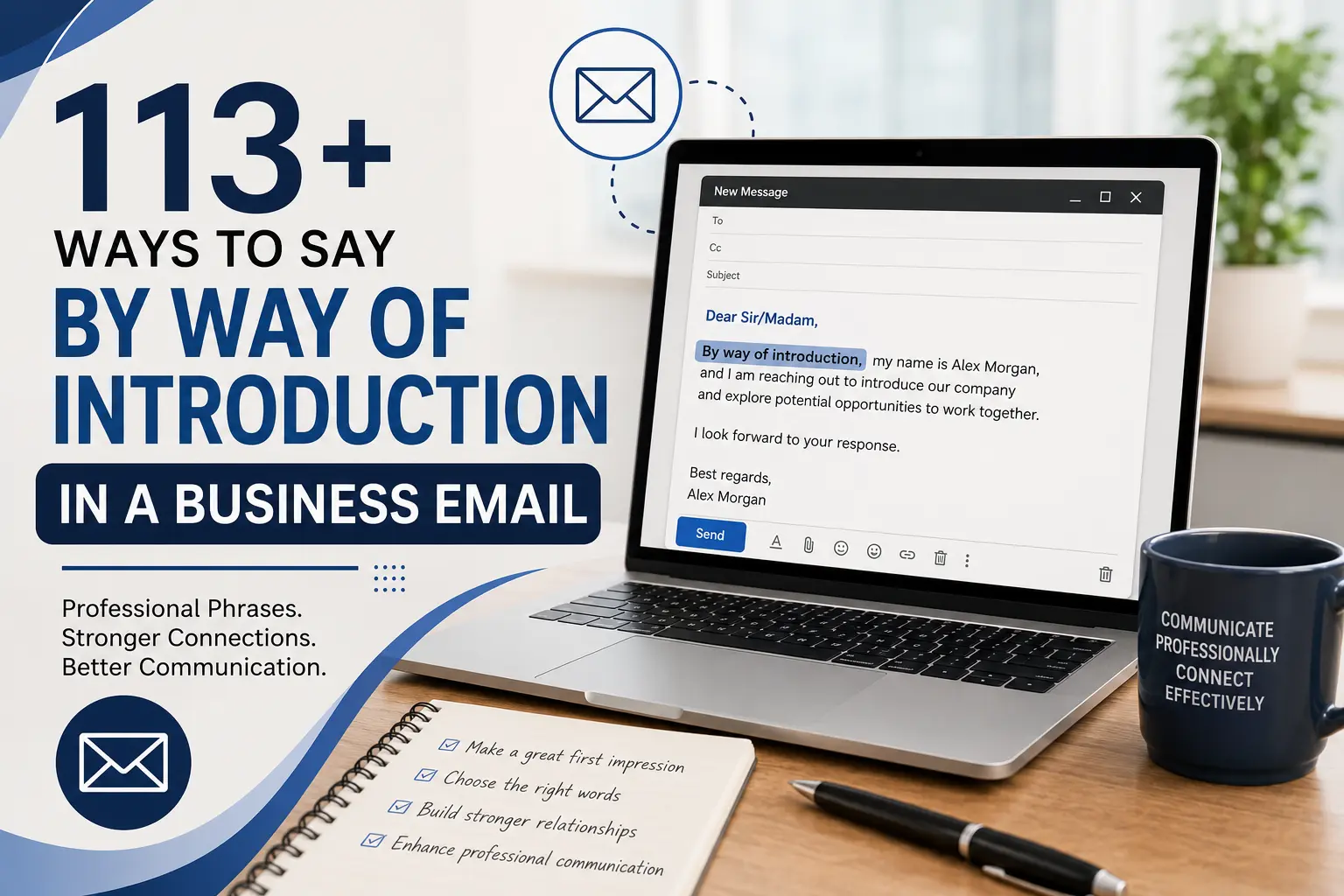
First impressions matter, especially in professional communication. Whether you are introducing yourself, connecting two colleagues, presenting a new client, or starting a formal business conversation, the phrase “by way of introduction” has long been a trusted choice. While it is professional and widely accepted, using the same expression repeatedly can make your emails sound predictable or overly formal.
Exploring fresh alternatives helps you tailor your message to different audiences and situations. The right introduction creates a welcoming tone, builds credibility, and encourages positive engagement from the very beginning. In this guide, you’ll discover 113+ ways to say by way of introduction in a business email that range from highly formal expressions to friendly conversational alternatives. These options will help you write more naturally while maintaining professionalism in every email you send.
What Does “By Way of Introduction” Mean?
The phrase “by way of introduction” is commonly used to begin presenting yourself, another person, or a topic before discussing the main purpose of an email.
It signals that the writer is providing background information to help the recipient understand who someone is or why they are being contacted.
The tone is generally formal, respectful, and professional. It is especially common in business correspondence, networking emails, client communications, and professional referrals.
When to Use It
You can use this phrase or its alternatives in many professional situations, including:
- Introducing yourself to a new client.
- Connecting two business contacts.
- Welcoming a new employee.
- Beginning a networking email.
- Presenting a colleague.
- Introducing a speaker before a meeting.
- Starting partnership discussions.
- Sending referral emails.
Examples include:
“I’d like to introduce myself before discussing our proposal.”
“Allow me to introduce our newest team member.”
“I’m pleased to connect you with our project manager.”
Is It Polite or Professional?
Yes. “By way of introduction” is both polite and professional.
It works particularly well in corporate emails, legal correspondence, executive communications, and formal networking. However, it may sound slightly old fashioned in modern workplaces. Many professionals now prefer warmer, more conversational alternatives that feel approachable while remaining respectful.
Choosing the right alternative depends on your audience. Formal clients may appreciate traditional wording, while colleagues and startups often respond better to friendly, concise introductions.
113+ Ways to Say By Way of Introduction in a Business Email
1. Allow me to introduce myself
Meaning: Begin by presenting yourself.
Tone: Formal
Example: “Allow me to introduce myself. My name is Sarah Williams, and I oversee client relations.”
Explanation: A timeless business introduction.
Purpose and Personalization: Ideal when contacting someone for the first time.
2. I’d like to introduce myself
Meaning: Present yourself politely.
Tone: Professional
Example: “I’d like to introduce myself before we discuss the project.”
Explanation: Friendly without being too casual.
3. Please allow me to introduce
Meaning: Introduce another person.
Tone: Formal
Example: “Please allow me to introduce our Senior Consultant.”
Explanation: Suitable for executive introductions.
4. I’m pleased to introduce
Meaning: Share a positive introduction.
Tone: Warm
Example: “I’m pleased to introduce our newest account manager.”
Explanation: Adds enthusiasm.
5. It’s my pleasure to introduce
Meaning: Express genuine appreciation.
Tone: Polite
Example: “It’s my pleasure to introduce our keynote speaker.”
Explanation: Common in formal announcements.
6. I’d like to present
Meaning: Introduce someone or something.
Tone: Professional
Example: “I’d like to present our project coordinator.”
Explanation: Excellent for presentations.
7. Meet
Meaning: Introduce someone simply.
Tone: Friendly
Example: “Meet our newest marketing specialist, Emma.”
Explanation: Perfect for internal emails.
8. Please welcome
Meaning: Invite recognition.
Tone: Warm
Example: “Please welcome our newest team member.”
Explanation: Common in onboarding.
9. I would like to connect you with
Meaning: Create a professional connection.
Tone: Professional
Example: “I would like to connect you with our legal advisor.”
Explanation: Ideal for referrals.
10. I’d like you to meet
Meaning: Introduce two people.
Tone: Friendly
Example: “I’d like you to meet our operations manager.”
Explanation: Great for networking.
11. May I introduce
Meaning: Politely present someone.
Tone: Formal
Example: “May I introduce our Finance Director?”
Explanation: Elegant and respectful.
12. I am writing to introduce
Meaning: State your purpose directly.
Tone: Professional
Example: “I am writing to introduce our new partnership programme.”
Explanation: Clear and concise.
13. I’d like to take a moment to introduce
Meaning: Begin with context.
Tone: Warm
Example: “I’d like to take a moment to introduce our customer success team.”
Explanation: Creates a conversational tone.
14. Let me introduce
Meaning: Present someone naturally.
Tone: Friendly
Example: “Let me introduce our lead designer.”
Explanation: Short and approachable.
15. I have the pleasure of introducing
Meaning: Present with enthusiasm.
Tone: Formal
Example: “I have the pleasure of introducing our guest speaker.”
Explanation: Appropriate for prestigious occasions.
16. I’m delighted to introduce
Meaning: Share excitement.
Tone: Warm
Example: “I’m delighted to introduce our newest client partner.”
Explanation: Positive and engaging.
17. I would like to present
Meaning: Introduce professionally.
Tone: Formal
Example: “I would like to present our proposal manager.”
Explanation: Suitable for executive settings.
18. Allow me to present
Meaning: Formally introduce.
Tone: Professional
Example: “Allow me to present our engineering team.”
Explanation: Adds authority.
19. I’d like to acquaint you with
Meaning: Help someone become familiar.
Tone: Formal
Example: “I’d like to acquaint you with our compliance process.”
Explanation: Ideal for detailed introductions.
20. I wanted to introduce
Meaning: Gentle introduction.
Tone: Friendly
Example: “I wanted to introduce our newest consultant.”
Explanation: Sounds natural.
21. Let me briefly introduce
22. To begin, I’d like to introduce
23. I wanted to connect you with
24. Please meet
25. It’s a pleasure to connect you with
26. I’d like to share an introduction
27. Allow me to make an introduction
28. I thought it would be helpful to introduce
29. I wanted to make you aware of
30. I’d like to familiarise you with
31. Please join me in welcoming
32. You may know
33. For context
34. To provide some background
35. To get us started
36. Before we begin
37. As a quick introduction
38. To start with
39. As an introduction
40. To introduce today’s topic
41. I’d like to begin by introducing
42. To kick things off
43. First, let me introduce
44. At the outset
45. As we begin
46. To set the stage
47. To provide context
48. To help you get acquainted
49. As background information
50. For your awareness
51. I’d like to bring to your attention
52. To introduce the conversation
53. As an opening note
54. To start our discussion
55. I would first like to introduce
56. To begin our conversation
57. I’d like to briefly introduce
58. I’m reaching out to introduce
59. I’m contacting you to introduce
60. I hope to introduce
61. I’d like to make your acquaintance
62. I’d like to extend an introduction
63. Permit me to introduce
64. May I present
65. I would like you to meet
66. I wanted you to meet
67. I’d love to introduce
68. Happy to introduce
69. Excited to introduce
70. I’m honoured to introduce
71. It is an honour to introduce
72. I appreciate the opportunity to introduce
73. I’d be delighted to introduce
74. Allow me to connect you with
75. I wanted to facilitate an introduction
76. I’d like to introduce you to
77. I’d appreciate introducing
78. Please let me introduce
79. This email serves as an introduction
80. This message is to introduce
81. I am pleased to connect
82. Kindly meet
83. Please become acquainted with
84. I’d like to draw your attention to
85. I’d like to highlight
86. To familiarise you with
87. To introduce our team
88. To introduce our services
89. To introduce our company
90. Allow me to share some background
91. To explain who we are
92. I’d like to provide an overview
93. Let me provide a brief overview
94. I’d like to give you some context
95. To offer some background
96. As a brief overview
97. To introduce our organisation
98. To introduce myself properly
99. To make a quick introduction
100. As a friendly introduction
101. As a professional introduction
102. To open our conversation
103. To begin this correspondence
104. To initiate our discussion
105. I wanted to reach out and introduce
106. As we connect
107. I hope this introduction is helpful
108. I’m happy to make this introduction
109. I’m writing to make an introduction
110. I’d like to formally introduce
111. Consider this a brief introduction
112. To introduce everyone involved
113. With this introduction
114. As an initial introduction
Conclusion
Finding the right words to introduce yourself or someone else can make your emails more engaging, professional, and memorable. While “by way of introduction” remains a respected phrase, expanding your vocabulary allows you to communicate with greater confidence and authenticity. Whether you are writing to a client, colleague, executive, or networking contact, these alternatives help create stronger first impressions and more meaningful business relationships. Try incorporating different expressions based on your audience and communication style to keep your emails polished, modern, and effective.
Discover more.
professional ways to say glad you like it