
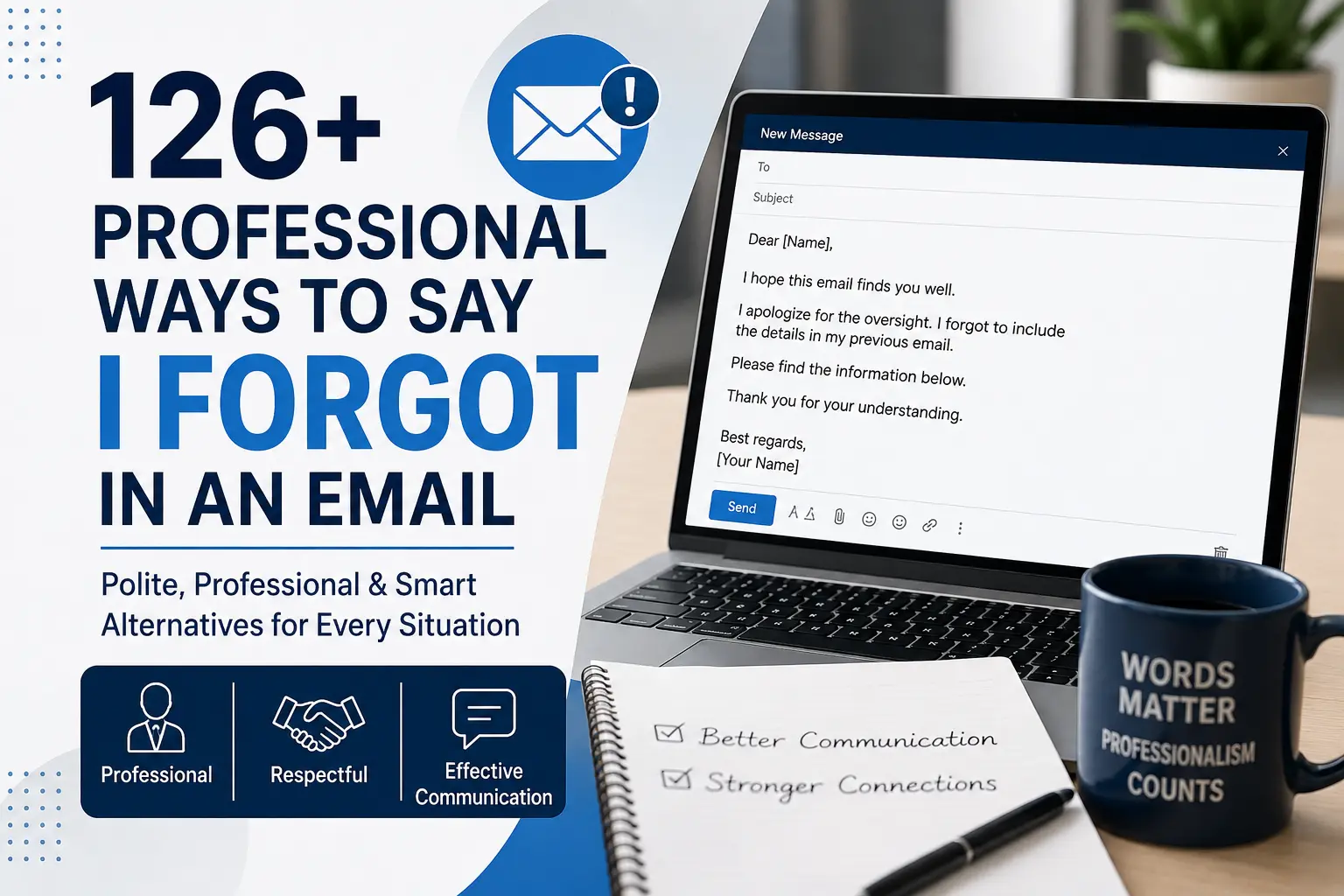
Everyone forgets something from time to time. Whether you missed an attachment, overlooked an important detail, or forgot to reply to an email, the way you communicate your mistake matters. Simply saying “I forgot” is honest, but it can sometimes sound too casual or abrupt in professional communication.
Choosing more thoughtful and polished alternatives helps maintain credibility while showing accountability. The right wording demonstrates professionalism, respect, and attention to the recipient’s time. It also softens the impact of the oversight without making excuses.
This guide explores 126+ professional ways to say I forgot in an email that fit business, academic, and everyday situations. You’ll find formal, friendly, and courteous alternatives with meanings, tones, examples, and practical explanations to help you communicate confidently in any email.
What Does 126+ Professional Ways to Say I Forgot in an Email Mean?
The phrase “I forgot” simply means you unintentionally failed to remember something or overlooked a task, detail, or responsibility.
In emails, it is commonly used when acknowledging a missed attachment, delayed response, forgotten meeting, overlooked request, or omitted information.
Its emotional tone is usually honest and apologetic. However, using more professional alternatives makes your message sound more polished, responsible, and considerate. Instead of focusing only on the mistake, these expressions often emphasize accountability and a willingness to correct it quickly.
When to Use It
Professional alternatives to “I forgot” work well in many situations, including:
Business emails
Example: “I overlooked attaching the revised proposal. Please find it attached now.”
Client communication
Example: “I unintentionally omitted that information from my previous email.”
Academic correspondence
Example: “I neglected to include the required reference list.”
Internal team messages
Example: “I missed adding your department to the email chain.”
Casual workplace conversations
Example: “That completely slipped my mind this morning.”
Follow up emails
Example: “I realized I hadn’t addressed your last question.”
Is It Polite or Professional?
Yes. Admitting a mistake professionally is a sign of honesty and accountability.
While saying “I forgot” is acceptable, more polished alternatives often sound more respectful and confident in workplace communication. They acknowledge the oversight without sounding careless.
Professional alternatives are especially appropriate when emailing supervisors, clients, professors, or business partners because they demonstrate ownership while maintaining a positive tone.
126+ Professional Ways to Say I Forgot in an Email
1. I overlooked that detail
Meaning: You unintentionally missed something.
Tone: Professional
Example: “I overlooked that detail in my previous email.”
Explanation: Suitable when discussing small omissions.
Purpose and Personalization: Shows attention to correcting the oversight promptly.
2. I unintentionally omitted it
Meaning: You accidentally left something out.
Tone: Formal
Example: “I unintentionally omitted the attachment.”
Explanation: Excellent for business emails.
3. That slipped my mind
Meaning: You temporarily forgot.
Tone: Friendly Professional
Example: “That slipped my mind during yesterday’s meeting.”
Explanation: Sounds natural without appearing careless.
4. I neglected to include it
Meaning: You forgot to add something.
Tone: Formal
Example: “I neglected to include the updated schedule.”
Explanation: Appropriate for formal correspondence.
5. I missed that earlier
Meaning: You failed to notice it before.
Tone: Neutral
Example: “I missed that earlier. Thank you for pointing it out.”
Explanation: Works well in follow up emails.
6. I failed to mention
Meaning: You forgot to state something.
Tone: Professional
Example: “I failed to mention the revised deadline.”
Explanation: Common in workplace communication.
7. I accidentally left it out
Meaning: You unintentionally omitted information.
Tone: Friendly
Example: “I accidentally left it out of my previous email.”
Explanation: Honest and conversational.
8. I overlooked including
Meaning: You forgot to attach or mention something.
Tone: Formal
Example: “I overlooked including the final invoice.”
Explanation: Ideal for client emails.
9. I didn’t realize I had omitted
Meaning: You noticed the omission later.
Tone: Professional
Example: “I didn’t realize I had omitted your name.”
Explanation: Shows awareness.
10. I missed adding
Meaning: You forgot to insert information.
Tone: Neutral
Example: “I missed adding the updated figures.”
Explanation: Suitable for reports.
11. I overlooked mentioning
Meaning: Forgot to mention something.
Tone: Professional
Example: “I overlooked mentioning our revised timeline.”
Explanation: Ideal for project updates.
12. I unintentionally missed
Meaning: Accidentally forgot.
Tone: Formal
Example: “I unintentionally missed your previous question.”
Explanation: Sounds sincere and respectful.
13. My apologies, I overlooked that
Meaning: Acknowledges an oversight politely.
Tone: Formal
Example: “My apologies, I overlooked that request.”
Explanation: Combines accountability with courtesy.
14. I inadvertently left that out
Meaning: Accidentally omitted something.
Tone: Professional
Example: “I inadvertently left that out of my response.”
Explanation: Excellent for business writing.
15. I forgot to attach it
Meaning: Missed sending an attachment.
Tone: Neutral
Example: “I forgot to attach the report. Please find it attached now.”
Explanation: Clear and direct.
16. I omitted that by mistake
Meaning: Accidentally excluded information.
Tone: Professional
Example: “I omitted that by mistake.”
Explanation: Appropriate for formal communication.
17. I missed including the document
Meaning: Forgot an attachment.
Tone: Formal
Example: “I missed including the signed agreement.”
Explanation: Frequently used in corporate emails.
18. I overlooked your earlier message
Meaning: Failed to notice an email.
Tone: Professional
Example: “I overlooked your earlier message. Thank you for your patience.”
Explanation: Good for delayed replies.
19. I missed your email
Meaning: Did not notice an email.
Tone: Friendly Professional
Example: “I sincerely apologize. I missed your email.”
Explanation: Common workplace phrase.
20. I failed to include the attachment
Meaning: Forgot a file.
Tone: Formal
Example: “I failed to include the attachment in my previous message.”
Explanation: Very common professional wording.
21. I overlooked your request
Meaning: Missed a request.
Tone: Professional
Example: “I overlooked your request earlier today.”
Explanation: Demonstrates accountability.
22. I forgot to copy you
Meaning: Missed adding someone.
Tone: Neutral
Example: “I forgot to copy you on the previous email.”
Explanation: Appropriate for internal communication.
23. I unintentionally skipped that
Meaning: Accidentally missed something.
Tone: Friendly
Example: “I unintentionally skipped that section.”
Explanation: Useful in reports.
24. I overlooked that requirement
Meaning: Missed an instruction.
Tone: Formal
Example: “I overlooked that requirement during preparation.”
Explanation: Works well in academic settings.
25. I missed one important point
Meaning: Forgot information.
Tone: Professional
Example: “I missed one important point regarding the proposal.”
Explanation: Keeps the conversation constructive.
26. I appreciate you bringing that to my attention
Meaning: Acknowledges reminder gracefully.
Tone: Professional
Example: “I appreciate you bringing that to my attention.”
Explanation: Positive and courteous.
27. Thank you for the reminder
Meaning: Appreciates assistance.
Tone: Friendly Professional
Example: “Thank you for the reminder. I’ve updated it now.”
Explanation: Keeps the tone appreciative.
28. I realize I didn’t mention
Meaning: Later recognized omission.
Tone: Professional
Example: “I realize I didn’t mention the revised budget.”
Explanation: Smooth transition.
29. I should have included
Meaning: Accepts responsibility.
Tone: Formal
Example: “I should have included those details.”
Explanation: Honest and accountable.
30. I appreciate your patience
Meaning: Acknowledges delay.
Tone: Professional
Example: “I appreciate your patience while I corrected this oversight.”
Explanation: Adds warmth.
Additional Professional Alternatives
- I missed that detail
- I overlooked the information
- I neglected to mention
- I forgot to update you
- I omitted that information
- I failed to attach the file
- I accidentally skipped that point
- I didn’t catch that earlier
- I should have mentioned that
- I overlooked the deadline
- I forgot to forward the email
- I neglected to respond sooner
- I missed your earlier note
- I overlooked the latest update
- I didn’t include the revised version
- I accidentally missed that step
- I omitted an important detail
- I forgot to confirm
- I failed to send the attachment
- I overlooked the schedule
- I mistakenly left that out
- I unintentionally forgot
- I missed referencing that
- I overlooked your comment
- I forgot to notify you
- I neglected that task
- I missed addressing your concern
- I overlooked the revision
- I forgot to acknowledge your email
- I inadvertently skipped that section
- I overlooked the correction
- I forgot to follow up
- I neglected to update the document
- I failed to copy everyone
- I overlooked one item
- I forgot to review that
- I unintentionally overlooked it
- I missed the latest version
- I overlooked the attachment
- I neglected to verify it
- I forgot to double check
- I missed your instruction
- I overlooked the revised figures
- I forgot to send the confirmation
- I neglected to clarify
- I omitted those details
- I overlooked the requirement
- I forgot to complete that step
- I missed an important update
- I overlooked your feedback
- I forgot to mention the deadline
- I neglected to include the reference
- I overlooked the email thread
- I forgot to add the recipient
- I missed the notification
- I overlooked your attachment
- I neglected to save the changes
- I forgot about that request
- I overlooked the final review
- I unintentionally skipped that email
- I failed to address that point
- I overlooked the meeting invitation
- I forgot to include everyone
- I neglected to acknowledge your message
- I missed one section
- I overlooked an important point
- I forgot to check that
- I neglected to finish it
- I overlooked the revised document
- I forgot to respond
- I unintentionally left it out
- I overlooked that message
- I forgot to revisit this
- I missed the reminder
- I overlooked the instructions
- I forgot to add that information
- I neglected the follow up
- I overlooked the attachment request
- I forgot one important detail
- I unintentionally missed that point
- I overlooked the latest email
- I forgot to include the link
- I neglected to verify the figures
- I overlooked that question
- I forgot to update the spreadsheet
- I missed the opportunity to mention
- I overlooked the final draft
- I forgot to complete the form
- I unintentionally omitted the details
- I overlooked your previous email
- I forgot to share the document
- I neglected to provide clarification
- I overlooked the final attachment
- I forgot to send the revised copy
- I unintentionally left out the information
- I appreciate your understanding regarding my oversight
Conclusion
Using professional alternatives to “I forgot” helps you communicate mistakes with confidence, courtesy, and accountability. Whether you’re writing to a client, colleague, manager, or professor, thoughtful wording can strengthen your credibility while maintaining positive relationships. Instead of relying on the same phrase repeatedly, experiment with different expressions that match the situation and tone of your email. Over time, these alternatives will make your communication more polished, respectful, and effective in every professional setting.
Discover more.
formal ways to say please let me know if you have any questions