
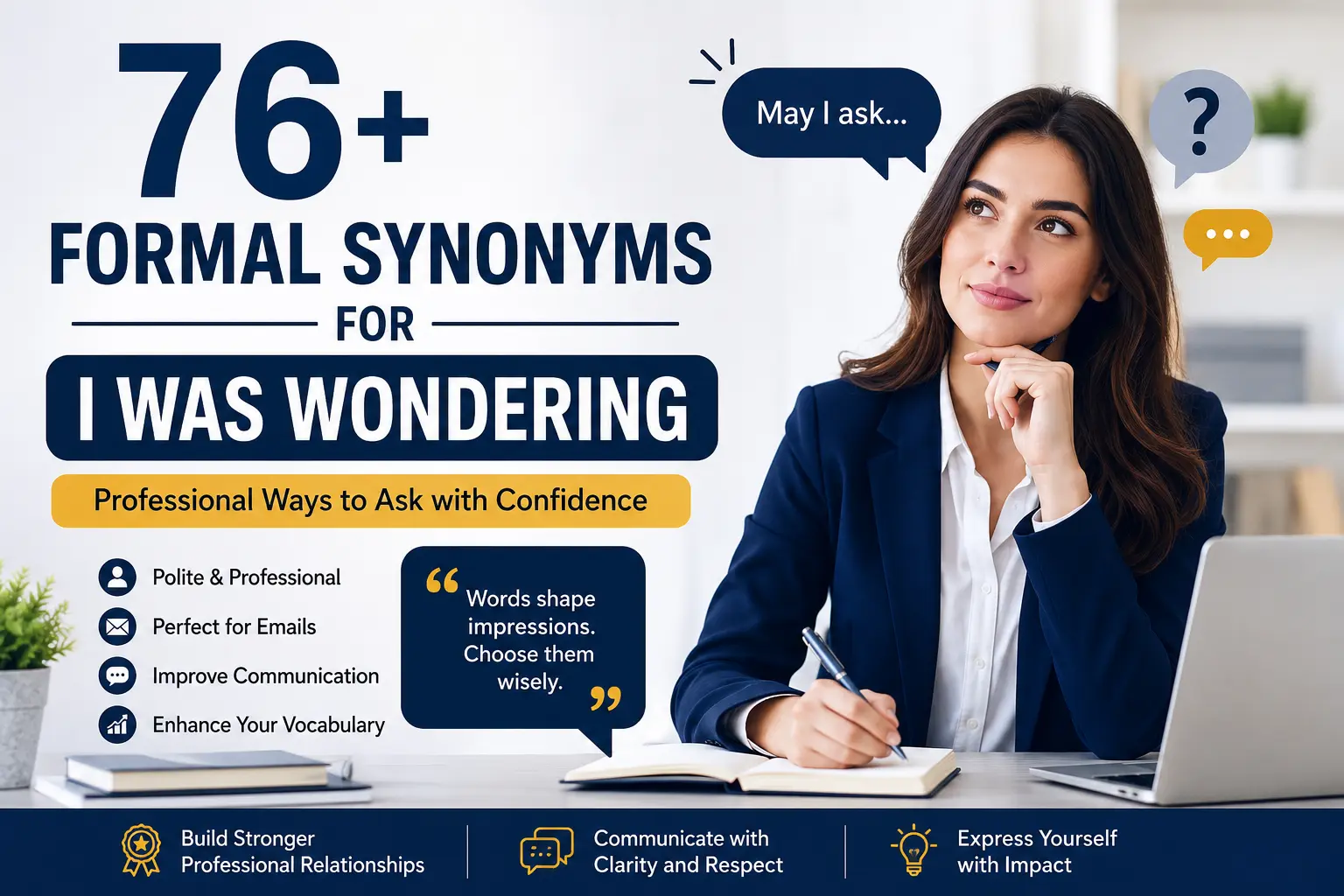
The phrase “I was wondering” is one of the most common ways to introduce a polite request, ask for information, or soften a question. It creates a respectful tone and helps conversations feel less demanding, making it especially useful in professional emails, workplace discussions, and everyday interactions.
While this expression is perfectly acceptable, using the same phrase repeatedly can make your writing and speech sound predictable. Learning fresh alternatives allows you to communicate with greater confidence, professionalism, and personality. Whether you’re writing a business email, requesting assistance, or starting a thoughtful conversation, choosing the right synonym helps you leave a positive impression. This guide explores 76+ formal synonyms for I was wondering, complete with meanings, tones, examples, and practical tips to help you express yourself more naturally and effectively.
What Does 76+ Formal Synonyms for I Was Wondering Mean?
The phrase “I was wondering” is a polite expression used before asking a question, making a request, or introducing a suggestion. Rather than sounding direct or demanding, it softens the message and shows courtesy toward the other person.
Its emotional tone is generally respectful, thoughtful, and considerate. Because of this, it’s frequently used in professional communication, customer service, academic writing, and everyday conversations where politeness matters.
For example:
I was wondering if you could send me the report by Friday.
Here, the speaker is making a request without sounding forceful.
When to Use It
“I was wondering” works well in many situations where diplomacy and politeness are important.
Common situations include:
- Writing professional emails
- Asking for help
- Requesting information
- Following up on previous conversations
- Making polite suggestions
- Customer service interactions
- Academic communication
- Networking messages
- Casual conversations with respect
- Formal meetings
Examples:
I was wondering whether you had time for a quick meeting.
I was wondering if this position is still available.
I was wondering whether you could clarify this point.
Is It Polite or Professional?
Yes. “I was wondering” is both polite and professional. It reduces the directness of a request, making it sound more considerate and respectful.
In business settings, it helps maintain positive relationships without appearing demanding. In casual conversations, it creates a friendly and approachable tone.
However, varying your language makes your communication stronger. Replacing this phrase with appropriate alternatives keeps emails engaging and demonstrates a broader vocabulary.
76+ Formal Synonyms for I Was Wondering
1. May I Ask
Meaning: A respectful way to introduce a question.
Tone: Formal
Example: May I ask whether the position has been filled?
Explanation: Excellent for business and academic communication.
Purpose: Shows courtesy before asking.
2. Could You Please Tell Me
Meaning: Politely requests information.
Tone: Professional
Example: Could you please tell me when the meeting begins?
Explanation: Ideal for emails and customer service.
3. Would You Mind Letting Me Know
Meaning: Requests information politely.
Tone: Formal
Example: Would you mind letting me know your availability?
Explanation: Softens requests.
4. I’d Like to Know
Meaning: Expresses curiosity politely.
Tone: Neutral
Example: I’d like to know more about your proposal.
Explanation: Direct yet respectful.
5. I Would Appreciate Knowing
Meaning: Expresses gratitude in advance.
Tone: Professional
Example: I would appreciate knowing the final deadline.
Explanation: Excellent for workplace emails.
6. May I Inquire
Meaning: Formal way to ask.
Tone: Very Formal
Example: May I inquire about the application process?
Explanation: Common in official correspondence.
7. I Wanted to Ask
Meaning: Introduces a question naturally.
Tone: Friendly
Example: I wanted to ask whether you’re available tomorrow.
Explanation: Suitable for most conversations.
8. Could I Ask
Meaning: Requests permission to ask.
Tone: Professional
Example: Could I ask for your opinion?
Explanation: Respectful and concise.
9. I’m Curious Whether
Meaning: Politely expresses interest.
Tone: Friendly
Example: I’m curious whether the project has started.
Explanation: Great for informal business conversations.
10. I Would Like to Inquire
Meaning: Formal inquiry.
Tone: Business
Example: I would like to inquire about pricing.
Explanation: Frequently used in professional emails.
11. Would It Be Possible To Know
Meaning: Politely asks for information.
Tone: Formal
Example: Would it be possible to know the delivery date?
Explanation: Very respectful.
12. Could You Clarify
Meaning: Requests clarification.
Tone: Professional
Example: Could you clarify the new policy?
Explanation: Useful in meetings.
13. May I Request Information About
Meaning: Politely requests details.
Tone: Formal
Example: May I request information about your services?
Explanation: Ideal for official inquiries.
14. I Hope You Can Help Me Understand
Meaning: Requests explanation.
Tone: Friendly
Example: I hope you can help me understand this requirement.
Explanation: Warm and respectful.
15. Could You Kindly Explain
Meaning: Politely requests explanation.
Tone: Professional
Example: Could you kindly explain the next steps?
Explanation: Excellent for business writing.
16. May I Have More Information
Meaning: Requests additional details.
Tone: Formal
Example: May I have more information regarding the event?
Explanation: Suitable for customer inquiries.
17. I Was Hoping to Learn
Meaning: Expresses interest.
Tone: Warm
Example: I was hoping to learn more about the opportunity.
Explanation: Sounds genuine.
18. Could You Share
Meaning: Requests information.
Tone: Friendly
Example: Could you share the latest update?
Explanation: Works in teams.
19. Would You Be Able To Tell Me
Meaning: Polite request.
Tone: Professional
Example: Would you be able to tell me the expected timeline?
Explanation: Great for formal emails.
20. I’d Appreciate Your Guidance
Meaning: Requests advice.
Tone: Respectful
Example: I’d appreciate your guidance on this matter.
Explanation: Shows humility.
21. May I Seek Your Advice
22. Could You Kindly Inform Me
23. Would You Kindly Let Me Know
24. I Would Be Grateful If You Could Explain
25. I’d Appreciate Your Input
26. May I Have Your Thoughts
27. I Would Welcome Your Advice
28. I’d Value Your Opinion
29. Would You Care To Share
30. May I Ask for Clarification
31. I Would Love To Learn More
32. Could You Offer Some Insight
33. I’d Like Further Information
34. May I Request Clarification
35. Could You Expand On That
36. Would You Mind Explaining
37. I’d Appreciate Some Details
38. May I Understand Better
39. Could You Help Me Understand
40. I Would Appreciate Your Advice
41. May I Learn More About
42. Would You Kindly Clarify
43. I’d Appreciate Any Information
44. May I Gain Some Insight
45. Could You Provide More Context
46. I Was Hoping You Could Clarify
47. I’d Like Additional Information
48. Could You Kindly Advise
49. I Would Appreciate Your Feedback
50. May I Hear Your Perspective
51. Could You Elaborate
52. I’d Like Some Clarification
53. Would You Kindly Explain Further
54. Could You Please Elaborate
55. I Hope You Can Clarify
56. May I Better Understand
57. I’d Appreciate an Explanation
58. Would You Mind Sharing More
59. May I Ask for More Details
60. Could You Walk Me Through It
61. I’d Be Interested To Know
62. Could You Shed Some Light On
63. I Was Hoping for Some Insight
64. Would You Kindly Provide Details
65. Could You Explain Further
66. I Would Appreciate Clarification
67. May I Politely Ask
68. Could I Request More Information
69. Would You Kindly Advise Me
70. I’d Appreciate Your Assistance
71. Could You Help Clarify
72. I Would Like Some Guidance
73. May I Seek Clarification
74. I’d Welcome More Information
75. Could You Kindly Share More Details
76. May I Respectfully Ask
77. I Would Be Interested in Knowing
Meaning: Expresses polite curiosity.
Tone: Formal
Example: I would be interested in knowing your recommendations.
Explanation: Excellent for executive communication, networking, and professional correspondence where a respectful tone is essential.
Purpose: Creates a thoughtful and courteous impression while inviting a response.
Conclusion
Expanding your vocabulary beyond “I was wondering” helps your communication become more polished, engaging, and adaptable. Whether you’re writing professional emails, making respectful requests, or simply having everyday conversations, these alternatives allow you to match the right tone for every situation. Practice using different expressions naturally, and you’ll soon develop a more confident and versatile communication style that leaves a lasting positive impression.
Discover more.
synonyms for token of appreciation