

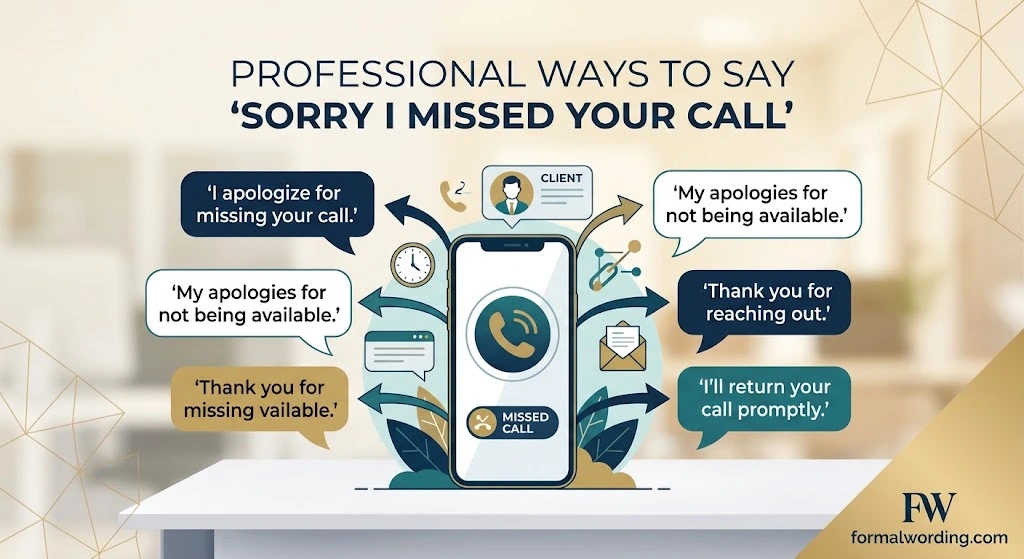
Missing an important phone call can happen to anyone, but how you respond afterward can make a lasting impression. Whether the missed call came from a manager, client, colleague, customer, friend, or family member, saying “Sorry, I missed your call” is a simple and respectful way to acknowledge it. However, repeating the same expression can sometimes sound routine or overly casual. Choosing a more thoughtful alternative can help you communicate professionalism, warmth, urgency, or genuine concern depending on the situation. In professional communication especially, the right wording can show that you value the other person’s time and are willing to reconnect promptly. In this guide, you will discover 94+ professional ways to say sorry I missed your call, along with meanings, tones, examples, and practical explanations to help you choose the most appropriate expression.
What Does “Sorry, I Missed Your Call” Mean?
“Sorry, I missed your call” is a polite expression used when someone has attempted to contact you by phone and you were unable to answer.
The phrase acknowledges the missed communication while expressing a mild apology. It can be used in professional, personal, and casual situations.
Its emotional tone is generally polite, apologetic, and considerate. However, the exact tone can change depending on the wording. For example, “I apologize for missing your call” sounds more formal, while “Sorry I couldn’t pick up” feels more conversational.
In professional environments, adding a helpful next step such as “Please let me know when you are available” can make the message more effective because it moves the conversation toward resolution.
When to Use It
There are many situations where you may need to explain that you were unavailable for a phone call.
Workplace Communication
Use professional alternatives when responding to a manager, colleague, supervisor, employee, or business partner.
Example:
“I apologize for missing your call. I was in another meeting and have just become available.”
Client Communication
When a customer or client calls, your response should demonstrate respect and responsiveness.
Example:
“My apologies for missing your call. Please let me know a convenient time to reconnect.”
Email Follow Up
A missed call can be acknowledged through email when returning the call immediately is not possible.
Example:
“I noticed that I missed your call earlier. I apologize for not being available at the time.”
Text or Messaging
For colleagues and familiar contacts, a shorter expression may be appropriate.
Example:
“Sorry I missed your call. I’m available now if you’d like to connect.”
Formal Business Situations
When communicating with senior professionals, important clients, or external organizations, use more polished wording.
Example:
“Please accept my apologies for missing your call. I would be pleased to speak with you at your convenience.”
Casual Conversations
With friends or familiar coworkers, a warm and natural expression is usually sufficient.
Example:
“Sorry I missed you. Give me a call when you get a chance.”
Is It Polite or Professional?
“Yes, sorry, I missed your call” is polite, but its level of professionalism depends on the context.
The word “sorry” communicates an apology, while “missed your call” clearly explains what happened. It is perfectly acceptable for everyday workplace communication, particularly when speaking with colleagues or people you know well.
For formal business communication, however, alternatives such as “I apologize for missing your call” or “Please accept my apologies for not being available” can sound more polished.
The best response usually combines three elements: acknowledgment, apology, and a practical next step.
For example:
“I apologize for missing your call. I was unavailable at the time, but I’m free now if you would like to speak.”
This approach sounds professional without becoming unnecessarily formal.
94+ Professional Ways to Say Sorry I Missed Your Call
1. I apologize for missing your call.
Meaning: You are formally expressing regret for not answering.
Tone: Formal and professional.
“I apologize for missing your call earlier. Please let me know when you are available.”
Why to use it: This is an excellent choice for clients, managers, and formal business communication.
2. My apologies for missing your call.
Meaning: A concise and courteous apology.
Tone: Professional and polished.
“My apologies for missing your call. I’m available now if you’d like to connect.”
Why to use it: Ideal for professional messages that need to remain brief.
3. Please accept my apologies for missing your call.
Meaning: A more formal request for understanding regarding the missed call.
Tone: Very formal and respectful.
“Please accept my apologies for missing your call earlier today.”
Why to use it: Best for formal correspondence or important professional contacts.
4. I’m sorry I wasn’t available when you called.
Meaning: You regret being unavailable.
Tone: Warm and professional.
“I’m sorry I wasn’t available when you called. I’d be happy to speak now.”
Why to use it: A natural alternative that sounds less repetitive.
5. I’m sorry I couldn’t take your call.
Meaning: You were unable to answer the phone.
Tone: Professional and conversational.
“I’m sorry I couldn’t take your call. Please let me know a suitable time to reconnect.”
Why to use it: Useful when you want to acknowledge the situation without overexplaining.
6. I apologize for not being able to answer your call.
Meaning: You formally regret being unable to answer.
Tone: Formal.
“I apologize for not being able to answer your call earlier.”
Why to use it: Particularly suitable for clients, executives, and formal emails.
7. My apologies for not being available.
Meaning: You are apologizing for your unavailability.
Tone: Polished and professional.
“My apologies for not being available when you reached out.”
Why to use it: Works well when the exact reason for missing the call is unnecessary.
8. I’m sorry I missed you on the phone.
Meaning: You regret not connecting by phone.
Tone: Friendly and professional.
“I’m sorry I missed you on the phone earlier. Please call when convenient.”
Why to use it: A warmer alternative for people you communicate with regularly.
9. I regret missing your call.
Meaning: You genuinely regret not answering.
Tone: Formal and sincere.
“I regret missing your call and would appreciate the opportunity to speak with you.”
Why to use it: Appropriate when the call was important.
10. I’m sorry I wasn’t able to answer.
Meaning: You acknowledge that you could not respond.
Tone: Polite and neutral.
“I’m sorry I wasn’t able to answer when you called.”
Why to use it: Simple enough for everyday professional conversations.
11. I apologize for being unavailable when you called.
Meaning: You were unavailable at the time of the call.
Tone: Formal and courteous.
“I apologize for being unavailable when you called. I’m available this afternoon.”
Why to use it: Excellent for workplace communication.
12. I’m sorry I couldn’t get to the phone.
Meaning: You were unable to reach or answer your phone.
Tone: Friendly and professional.
“I’m sorry I couldn’t get to the phone earlier.”
Why to use it: Natural for colleagues and familiar business contacts.
13. Please excuse me for missing your call.
Meaning: You politely ask the other person to excuse your absence.
Tone: Courteous and formal.
“Please excuse me for missing your call. I was assisting a customer at the time.”
Why to use it: Useful when you want to provide a brief explanation.
14. Please excuse my missed call response.
Meaning: You acknowledge the delay in responding.
Tone: Formal.
“Please excuse my delayed response to your call.”
Why to use it: Better suited to written communication.
15. I’m sorry I wasn’t able to connect with you.
Meaning: You regret not establishing communication.
Tone: Professional and warm.
“I’m sorry I wasn’t able to connect with you earlier.”
Why to use it: Excellent for business networking and client communication.
16. I apologize for the missed connection.
Meaning: You regret that the two of you were unable to speak.
Tone: Professional and polished.
“I apologize for the missed connection. I’d be glad to reschedule our conversation.”
Why to use it: Particularly effective for business calls.
17. I’m sorry we weren’t able to connect by phone.
Meaning: You acknowledge that the phone conversation did not happen.
Tone: Professional and collaborative.
“I’m sorry we weren’t able to connect by phone today.”
Why to use it: Good for calls involving appointments or scheduled discussions.
18. I apologize for not catching your call.
Meaning: You did not notice or answer the incoming call.
Tone: Professional and conversational.
“I apologize for not catching your call earlier.”
Why to use it: Less formal than “I apologize for missing your call,” while remaining respectful.
19. I’m sorry I didn’t catch your call.
Meaning: You did not answer the call.
Tone: Friendly and natural.
“I’m sorry I didn’t catch your call. I’m free now.”
Why to use it: Good for colleagues and familiar professional contacts.
20. I apologize for overlooking your call.
Meaning: You unintentionally failed to respond to the call.
Tone: Formal.
“I apologize for overlooking your call earlier.”
Why to use it: Useful when the missed call resulted from being occupied or distracted.
21. I’m sorry I was unable to take your call.
Meaning: You could not answer.
Tone: Formal and courteous.
“I’m sorry I was unable to take your call this morning.”
Why to use it: Suitable for business emails and messages.
22. I regret that I was unavailable when you called.
Meaning: You sincerely regret being unavailable.
Tone: Formal and sincere.
“I regret that I was unavailable when you called.”
Why to use it: Appropriate when the call had particular importance.
23. I apologize for not responding to your call sooner.
Meaning: You are apologizing for a delayed response.
Tone: Professional.
“I apologize for not responding to your call sooner.”
Why to use it: Excellent when some time has passed since the missed call.
24. Thank you for reaching out, and my apologies for missing your call.
Meaning: You appreciate the person’s attempt to contact you while apologizing.
Tone: Warm and professional.
“Thank you for reaching out, and my apologies for missing your call. I’m available now.”
Why to use it: Combines appreciation with accountability.
25. Thank you for calling, and I apologize for not being available.
Meaning: You acknowledge their effort to contact you.
Tone: Professional and appreciative.
“Thank you for calling, and I apologize for not being available earlier.”
Why to use it: Excellent for customer and client communication.
26. Thank you for your call. I’m sorry I missed it.
Meaning: You thank the person while acknowledging the missed call.
Tone: Friendly and professional.
“Thank you for your call. I’m sorry I missed it.”
Why to use it: A balanced option for everyday business communication.
27. I noticed I missed your call. My apologies.
Meaning: You have seen the missed call and are apologizing.
Tone: Concise and professional.
“I noticed I missed your call. My apologies. How may I assist you?”
Why to use it: Ideal for short professional texts.
28. I just noticed your missed call.
Meaning: You have only recently become aware of the call.
Tone: Neutral and conversational.
“I just noticed your missed call. Is there something you’d like to discuss?”
Why to use it: Useful when you are responding shortly after the call.
29. I’ve just seen that you called.
Meaning: You recently noticed the attempted contact.
Tone: Natural and professional.
“I’ve just seen that you called. I’m available now.”
Why to use it: A straightforward alternative for quick messages.
30. I just saw your call and apologize for missing it.
Meaning: You recently noticed the call and regret not answering.
Tone: Professional and courteous.
“I just saw your call and apologize for missing it.”
Why to use it: Works well for mobile messaging.
31. I’m sorry I couldn’t respond when you called.
Meaning: You were unable to respond immediately.
Tone: Warm and professional.
“I’m sorry I couldn’t respond when you called. Please let me know if you’re available now.”
Why to use it: Helpful when you want to emphasize responsiveness.
32. I apologize for the delayed response to your call.
Meaning: Your response came later than expected.
Tone: Formal.
“I apologize for the delayed response to your call.”
Why to use it: Particularly suitable for formal emails.
33. Thank you for your patience while I returned your call.
Meaning: You appreciate their patience while you responded.
Tone: Professional and appreciative.
“Thank you for your patience while I returned your call.”
Why to use it: Best when you have already called them back.
34. I appreciate you reaching out and apologize for missing your call.
Meaning: You value their effort and apologize.
Tone: Warm and professional.
“I appreciate you reaching out and apologize for missing your call.”
Why to use it: Great for clients, prospects, and business partners.
35. I appreciate your call and regret that I was unavailable.
Meaning: You value their call but regret your unavailability.
Tone: Formal and respectful.
“I appreciate your call and regret that I was unavailable at the time.”
Why to use it: Suitable for senior or external contacts.
36. I’m grateful you reached out, and I’m sorry I missed your call.
Meaning: You appreciate the communication attempt.
Tone: Warm and sincere.
“I’m grateful you reached out, and I’m sorry I missed your call.”
Why to use it: Adds a more personal touch to professional communication.
37. I apologize for being unable to answer your call promptly.
Meaning: You regret not responding immediately.
Tone: Formal.
“I apologize for being unable to answer your call promptly.”
Why to use it: Suitable when timely communication matters.
38. I’m sorry I wasn’t able to respond immediately.
Meaning: You could not respond at once.
Tone: Professional and neutral.
“I’m sorry I wasn’t able to respond immediately. I’m available now.”
Why to use it: Useful when the response was delayed but not significantly so.
39. My apologies for the delay in returning your call.
Meaning: You apologize for taking time to call back.
Tone: Formal.
“My apologies for the delay in returning your call.”
Why to use it: Excellent for business correspondence.
40. I apologize for the delay in getting back to you.
Meaning: You regret taking too long to respond.
Tone: Professional.
“I apologize for the delay in getting back to you following your call.”
Why to use it: Ideal when several hours or days have passed.
41. I’m sorry for the delay in responding to your call.
Meaning: You apologize for the late response.
Tone: Professional and courteous.
“I’m sorry for the delay in responding to your call.”
Why to use it: A clear option for formal and semi formal settings.
42. Please accept my apologies for the delayed callback.
Meaning: You formally apologize for returning the call late.
Tone: Very formal.
“Please accept my apologies for the delayed callback.”
Why to use it: Useful for important clients or formal business situations.
43. I apologize for not returning your call sooner.
Meaning: You regret not calling back earlier.
Tone: Formal and professional.
“I apologize for not returning your call sooner.”
Why to use it: Best when the person left a voicemail or requested a callback.
44. I’m sorry I didn’t return your call earlier.
Meaning: You apologize for the delayed callback.
Tone: Friendly and professional.
“I’m sorry I didn’t return your call earlier.”
Why to use it: Natural for coworkers and regular contacts.
45. I regret the delay in returning your call.
Meaning: You sincerely regret the delayed response.
Tone: Formal and serious.
“I regret the delay in returning your call and appreciate your patience.”
Why to use it: Appropriate for situations where responsiveness is especially important.
46. I apologize for the inconvenience caused by my missed call response.
Meaning: You recognize that the delayed response may have caused inconvenience.
Tone: Formal.
“I apologize for any inconvenience caused by my delayed response to your call.”
Why to use it: Best when the delay may have affected the other person.
47. I’m sorry if my missed call caused any inconvenience.
Meaning: You acknowledge a possible inconvenience.
Tone: Courteous and considerate.
“I’m sorry if my missed call caused any inconvenience.”
Why to use it: Useful when the impact of the missed call is uncertain.
48. I apologize for any inconvenience resulting from my unavailability.
Meaning: You formally acknowledge possible inconvenience.
Tone: Very formal.
“I apologize for any inconvenience resulting from my unavailability earlier.”
Why to use it: Suitable for formal customer or corporate communication.
49. I’m sorry I was tied up when you called.
Meaning: You were busy and unable to answer.
Tone: Friendly and conversational.
“I’m sorry I was tied up when you called.”
Why to use it: Good for familiar colleagues and professional contacts.
50. I apologize; I was occupied when you called.
Meaning: You were busy at the time of the call.
Tone: Formal and composed.
“I apologize; I was occupied when you called.”
Why to use it: Provides a brief explanation without unnecessary detail.
51. I’m sorry I was in another meeting when you called.
Meaning: You missed the call because you were attending a meeting.
Tone: Professional.
“I’m sorry I was in another meeting when you called.”
Why to use it: Particularly useful in workplace settings.
52. I apologize for missing your call while I was in a meeting.
Meaning: You explain that a meeting prevented you from answering.
Tone: Formal and professional.
“I apologize for missing your call while I was in a meeting.”
Why to use it: Appropriate when a professional explanation is helpful.
53. I’m sorry I couldn’t answer while I was assisting someone.
Meaning: You were helping another person when the call came in.
Tone: Professional and considerate.
“I’m sorry I couldn’t answer while I was assisting another customer.”
Why to use it: Excellent for service and workplace situations.
54. I apologize for being engaged elsewhere when you called.
Meaning: You were occupied with another responsibility.
Tone: Formal and polished.
“I apologize for being engaged elsewhere when you called.”
Why to use it: A sophisticated option for formal correspondence.
55. I’m sorry I was unavailable at the time of your call.
Meaning: You were not available when contacted.
Tone: Professional and neutral.
“I’m sorry I was unavailable at the time of your call.”
Why to use it: Works across many workplace scenarios.
56. I apologize for not being at my phone when you called.
Meaning: You were away from your phone.
Tone: Professional and straightforward.
“I apologize for not being at my phone when you called.”
Why to use it: Useful when physical absence from the phone was the reason.
57. I’m sorry I was away from my phone earlier.
Meaning: You were not near your phone.
Tone: Friendly and natural.
“I’m sorry I was away from my phone earlier.”
Why to use it: Appropriate for less formal professional conversations.
58. I apologize for being away from my phone when you reached out.
Meaning: You were temporarily inaccessible.
Tone: Professional and warm.
“I apologize for being away from my phone when you reached out.”
Why to use it: A polished version for business messages.
59. I’m sorry I wasn’t reachable when you called.
Meaning: You could not be reached at the time.
Tone: Professional and neutral.
“I’m sorry I wasn’t reachable when you called.”
Why to use it: Useful when discussing availability without giving personal details.
60. I apologize for being unreachable earlier.
Meaning: You regret not being accessible.
Tone: Formal.
“I apologize for being unreachable earlier.”
Why to use it: Concise and effective for formal messages.
61. I’m sorry I wasn’t in a position to answer your call.
Meaning: Circumstances prevented you from answering.
Tone: Professional and tactful.
“I’m sorry I wasn’t in a position to answer your call at the time.”
Why to use it: Useful when you prefer not to disclose the exact reason.
62. I apologize for being unable to respond at the time.
Meaning: You could not respond when contacted.
Tone: Formal.
“I apologize for being unable to respond at the time.”
Why to use it: Ideal for polished written communication.
63. I’m sorry I couldn’t give you my attention when you called.
Meaning: You were unable to focus on the call.
Tone: Warm and considerate.
“I’m sorry I couldn’t give you my attention when you called.”
Why to use it: Useful when you were handling another responsibility.
64. I apologize for not being able to give your call my full attention.
Meaning: You were unable to properly engage with the call.
Tone: Professional.
“I apologize for not being able to give your call my full attention earlier.”
Why to use it: Appropriate when you answered briefly but could not properly communicate.
65. I’m sorry I wasn’t able to speak with you earlier.
Meaning: You regret not having the conversation sooner.
Tone: Warm and professional.
“I’m sorry I wasn’t able to speak with you earlier.”
Why to use it: A flexible alternative for many professional circumstances.
66. I apologize for not having the opportunity to speak with you earlier.
Meaning: You regret that a conversation could not take place.
Tone: Formal and polished.
“I apologize for not having the opportunity to speak with you earlier.”
Why to use it: Excellent for formal correspondence.
67. I’m sorry we missed the opportunity to connect.
Meaning: You regret not communicating.
Tone: Warm and professional.
“I’m sorry we missed the opportunity to connect earlier.”
Why to use it: Particularly useful for networking and business relationships.
68. I apologize that we were unable to connect.
Meaning: You acknowledge that communication did not happen.
Tone: Formal.
“I apologize that we were unable to connect by phone.”
Why to use it: Suitable for formal business communication.
69. I’m sorry we didn’t connect when you called.
Meaning: The call did not result in communication.
Tone: Friendly and professional.
“I’m sorry we didn’t connect when you called.”
Why to use it: Natural for colleagues and business contacts.
70. I regret that we missed each other’s call.
Meaning: You both failed to connect by phone.
Tone: Professional and warm.
“I regret that we missed each other’s call earlier.”
Why to use it: Perfect when both people attempted to communicate.
71. It seems we missed each other by phone.
Meaning: You were unable to connect during the attempted calls.
Tone: Friendly and neutral.
“It seems we missed each other by phone. Let me know when you’re free.”
Why to use it: A softer alternative that avoids sounding overly apologetic.
72. I’m sorry our calls didn’t align.
Meaning: Your availability did not coincide.
Tone: Friendly and modern.
“I’m sorry our calls didn’t align today.”
Why to use it: Good for scheduling and recurring professional communication.
73. It looks like we missed one another.
Meaning: Both parties failed to connect.
Tone: Warm and conversational.
“It looks like we missed one another. I’m available now.”
Why to use it: A natural expression for familiar contacts.
74. I’m sorry our schedules didn’t line up.
Meaning: Timing prevented the call from happening.
Tone: Friendly and professional.
“I’m sorry our schedules didn’t line up earlier.”
Why to use it: Excellent when the missed call is connected to scheduling difficulties.
75. I apologize for the missed opportunity to speak.
Meaning: You regret not having the conversation.
Tone: Formal and thoughtful.
“I apologize for the missed opportunity to speak with you earlier.”
Why to use it: Suitable for important professional conversations.
76. I’m sorry I missed our scheduled call.
Meaning: You apologize for failing to attend an agreed call.
Tone: Professional and accountable.
“I’m sorry I missed our scheduled call. I would appreciate the opportunity to reschedule.”
Why to use it: Best when the call had been arranged in advance.
77. Please accept my apologies for missing our call.
Meaning: A formal apology for missing a scheduled conversation.
Tone: Very formal.
“Please accept my apologies for missing our call this morning.”
Why to use it: Appropriate for clients, interviews, and senior professionals.
78. I sincerely apologize for missing our call.
Meaning: You emphasize that the apology is genuine.
Tone: Formal and sincere.
“I sincerely apologize for missing our call and appreciate your understanding.”
Why to use it: Best when the missed call was particularly important.
79. I’m truly sorry I missed your call.
Meaning: You express genuine regret.
Tone: Warm and sincere.
“I’m truly sorry I missed your call earlier.”
Why to use it: Adds emotional sincerity without becoming overly formal.
80. I’m very sorry I wasn’t available.
Meaning: You strongly acknowledge your regret.
Tone: Warm and apologetic.
“I’m very sorry I wasn’t available when you called.”
Why to use it: Useful when the call was important or time sensitive.
81. I sincerely regret missing your call.
Meaning: You genuinely regret not answering.
Tone: Formal and serious.
“I sincerely regret missing your call and would welcome the chance to speak with you.”
Why to use it: Suitable for sensitive or high priority communication.
82. I regret not being available to take your call.
Meaning: You regret being unavailable.
Tone: Formal and polished.
“I regret not being available to take your call earlier.”
Why to use it: Effective in formal written communication.
83. I’m sorry I missed your call, and I’m available now.
Meaning: You apologize and immediately offer a solution.
Tone: Helpful and professional.
“I’m sorry I missed your call, and I’m available now if you’d like to speak.”
Why to use it: One of the most useful options when immediate reconnection is possible.
84. My apologies for missing your call. I’m free now.
Meaning: You apologize while confirming your availability.
Tone: Professional and efficient.
“My apologies for missing your call. I’m free now if this is a convenient time.”
Why to use it: Excellent for short business messages.
85. I apologize for missing your call. When would be a good time to reconnect?
Meaning: You apologize and ask to reschedule.
Tone: Professional and proactive.
“I apologize for missing your call. When would be a good time to reconnect?”
Why to use it: Perfect when you want to make returning the conversation easy.
86. I’m sorry I missed your call. Please let me know when you’re available.
Meaning: You apologize and invite the person to suggest another time.
Tone: Polite and professional.
“I’m sorry I missed your call. Please let me know when you’re available.”
Why to use it: Useful when your schedule is flexible.
87. I apologize for missing your call. I’d be happy to call you back.
Meaning: You offer to return the call.
Tone: Professional and helpful.
“I apologize for missing your call. I’d be happy to call you back at a convenient time.”
Why to use it: Shows initiative and willingness to resolve the communication gap.
88. I’m sorry I missed your call. May I return your call shortly?
Meaning: You ask permission to call back soon.
Tone: Polite and formal.
“I’m sorry I missed your call. May I return your call shortly?”
Why to use it: Particularly suitable for clients and formal contacts.
89. I apologize for missing your call. I’ll return it as soon as possible.
Meaning: You promise a prompt callback.
Tone: Professional and reassuring.
“I apologize for missing your call. I’ll return it as soon as possible.”
Why to use it: Best when immediate responsiveness matters.
90. My apologies for missing your call. I’ll get back to you shortly.
Meaning: You apologize and indicate a prompt response.
Tone: Professional and concise.
“My apologies for missing your call. I’ll get back to you shortly.”
Why to use it: Excellent for workplace texts and emails.
91. I’m sorry I missed your call. I look forward to speaking with you.
Meaning: You apologize while expressing willingness to communicate.
Tone: Warm and professional.
“I’m sorry I missed your call. I look forward to speaking with you.”
Why to use it: Adds a positive and relationship focused ending.
92. I apologize for missing your call and appreciate your understanding.
Meaning: You apologize and thank the person for being understanding.
Tone: Formal and appreciative.
“I apologize for missing your call and appreciate your understanding.”
Why to use it: Suitable when you want to maintain a respectful professional tone.
93. Thank you for your call. I apologize for being unavailable at the time.
Meaning: You appreciate the person’s effort while explaining your absence.
Tone: Formal and courteous.
“Thank you for your call. I apologize for being unavailable at the time.”
Why to use it: Excellent for clients and customer service situations.
94. I appreciate your patience, and I apologize for missing your call.
Meaning: You recognize their patience and apologize.
Tone: Warm, professional, and appreciative.
“I appreciate your patience, and I apologize for missing your call earlier.”
Why to use it: Ideal when the person has been waiting for a response.
95. Thank you for reaching out. I’m sorry I wasn’t available to answer.
Meaning: You acknowledge their effort and apologize for your unavailability.
Tone: Friendly and professional.
“Thank you for reaching out. I’m sorry I wasn’t available to answer.”
Why to use it: A polished option for customers, clients, and colleagues.
96. I appreciate you trying to reach me and apologize for missing your call.
Meaning: You show appreciation for their attempt to communicate.
Tone: Professional and sincere.
“I appreciate you trying to reach me and apologize for missing your call.”
Why to use it: Adds warmth and demonstrates that their communication matters.
97. I’m sorry I missed your call. Please feel free to reach me at your convenience.
Meaning: You invite the person to reconnect whenever convenient.
Tone: Courteous and professional.
“I’m sorry I missed your call. Please feel free to reach me at your convenience.”
Why to use it: Best when you want to give the other person flexibility.
98. My apologies for missing your call. I’m happy to reconnect whenever convenient for you.
Meaning: You apologize and offer flexible scheduling.
Tone: Warm and professional.
“My apologies for missing your call. I’m happy to reconnect whenever convenient for you.”
Why to use it: Particularly useful when communicating with busy professionals.
99. I apologize for missing your call and would welcome the opportunity to connect.
Meaning: You express regret while showing enthusiasm for continuing the conversation.
Tone: Formal and positive.
“I apologize for missing your call and would welcome the opportunity to connect.”
Why to use it: Excellent for networking, interviews, clients, and business opportunities.
100. I’m sorry I missed your call. I’m looking forward to connecting with you.
Meaning: You apologize while maintaining a positive attitude toward future communication.
Tone: Warm and professional.
“I’m sorry I missed your call. I’m looking forward to connecting with you soon.”
Why to use it: A strong closing expression that combines accountability with enthusiasm.
How to Choose the Right Alternative
The best alternative depends on your relationship with the person, the importance of the call, and the communication channel.
For a formal business email, choose expressions such as:
“Please accept my apologies for missing your call.”
For a client or customer, consider:
“Thank you for reaching out. I apologize for not being available when you called.”
For a manager or senior colleague, use:
“I apologize for missing your call. Please let me know a convenient time to reconnect.”
For a coworker, a more natural expression works well:
“Sorry I missed your call. I’m available now.”
For a casual professional contact, you could say:
“I just noticed your call. Sorry I missed you.”
The most effective messages usually avoid unnecessary explanations. A concise apology followed by a clear next step sounds confident, considerate, and professional.
Tips for Responding After Missing a Call
Respond Promptly
If the call is important, avoid waiting unnecessarily before responding. A quick acknowledgment demonstrates reliability.
Offer a Solution
Instead of simply apologizing, suggest a callback, provide your availability, or ask for a convenient time.
Avoid Overexplaining
You usually do not need to provide a detailed account of why you missed the call. A brief explanation is enough when one is necessary.
Match the Tone
Use formal language with clients and senior professionals, while choosing warmer and more conversational wording with colleagues and familiar contacts.
Show Appreciation
Thanking someone for reaching out can make your response sound more positive and relationship focused.
Be Specific When Necessary
If the call was time sensitive, provide a clear timeframe.
“I apologize for missing your call. I’ll return your call within the next 30 minutes.”
This gives the other person confidence that the matter is being handled.
Conclusion
Knowing different ways to say sorry I missed your call allows you to communicate with greater confidence, professionalism, and warmth. While the original phrase is perfectly acceptable, choosing a more specific alternative can help you match the situation and relationship more effectively. Whether you need a formal apology for a client, a concise response to a colleague, or a warm message for a familiar contact, the right wording can make your communication feel thoughtful rather than routine. Experiment with these expressions naturally, focus on sincerity, and whenever possible, pair your apology with a clear next step.
Discover more