
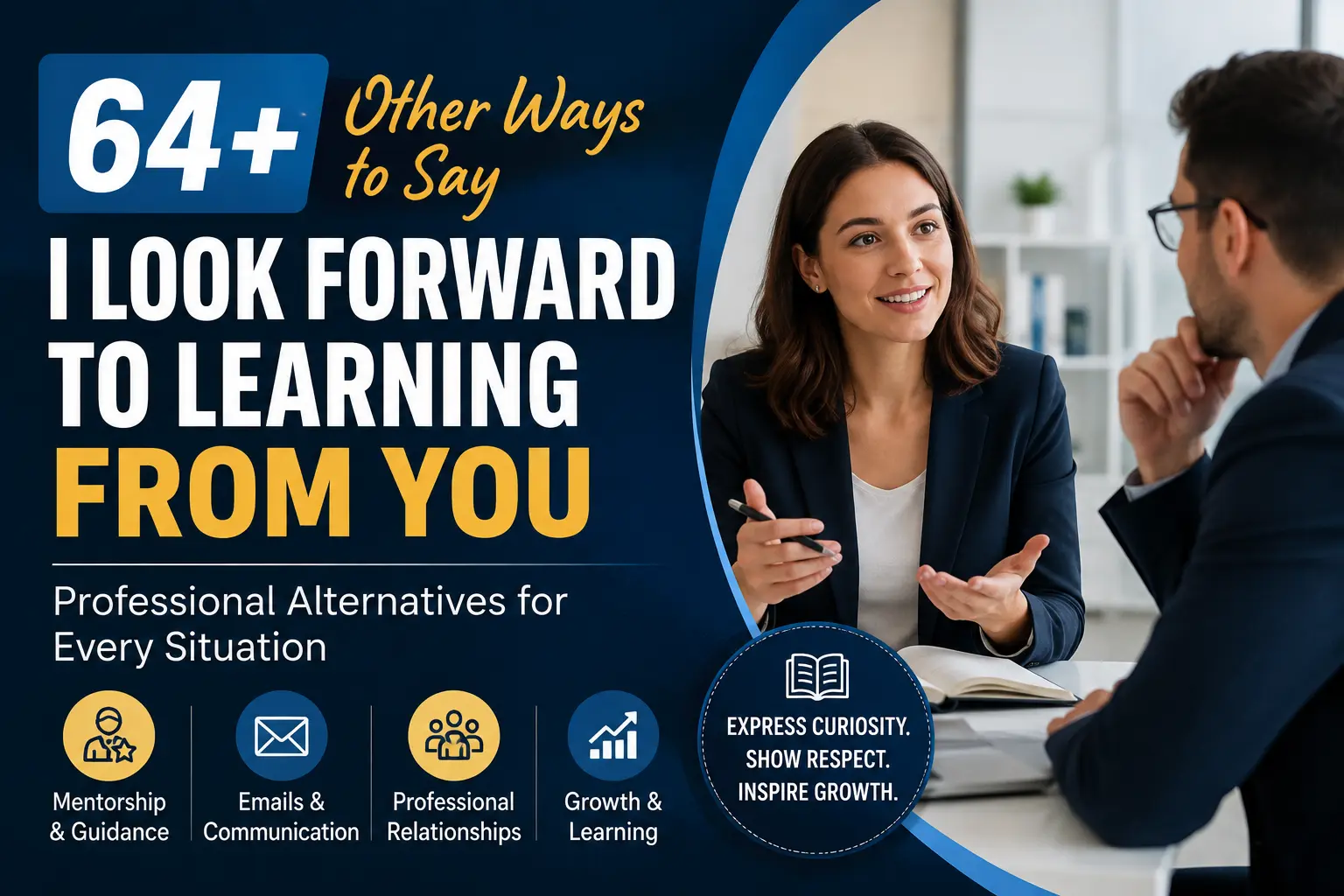
Few phrases communicate genuine curiosity, respect, and enthusiasm as naturally as “I look forward to learning from you.” It tells someone that you value their knowledge, experience, perspective, or guidance and are eager to gain something meaningful from your interaction with them. The expression is especially useful in professional communication, mentorship, education, networking, interviews, meetings, and collaborative environments. However, repeating the same sentence can sometimes make your writing feel predictable. Using thoughtful alternatives allows you to match your wording with the relationship, occasion, and level of formality. Whether you are writing to a manager, teacher, mentor, colleague, speaker, client, or industry expert, the right expression can make your message warmer and more memorable. In this guide, you will discover 64+ polished alternatives that help you express appreciation, curiosity, respect, and enthusiasm with greater variety and personality.
What Does “I Look Forward to Learning From You” Mean?
“I look forward to learning from you” means that you are excited or genuinely interested in gaining knowledge, insight, skills, advice, or perspective from another person.
The phrase communicates more than simple curiosity. It often shows respect for someone’s expertise and acknowledges that you believe they have something valuable to teach or share.
For example:
I look forward to learning from you during the upcoming training program.
The tone is positive, respectful, appreciative, and optimistic. It works particularly well when speaking to someone with greater experience, specialized knowledge, leadership responsibilities, or a valuable perspective.
The expression can also create a sense of humility. Instead of presenting yourself as someone who already knows everything, you demonstrate openness to growth and recognize the contribution another person can make to your development.
When to Use It
“I look forward to learning from you” is versatile enough for many personal, academic, and professional situations.
Professional emails
Use it when communicating with a manager, consultant, executive, trainer, client, or industry expert.
I look forward to learning from you as we begin this project.
Mentorship
The expression works naturally when beginning a mentoring relationship.
I am excited to learn from your experience and guidance.
Interviews
You can use it when discussing a potential employer, supervisor, or team.
I would be delighted to learn from the experienced professionals on your team.
Training sessions
It is appropriate when introducing yourself to a trainer or instructor.
I look forward to learning from your expertise during the workshop.
Academic settings
Students can use it when addressing teachers, professors, researchers, or academic mentors.
I look forward to learning from your perspective on this subject.
Networking
The phrase can help establish a respectful connection with an experienced professional.
I am excited to connect and learn from your experience in the industry.
Speeches and presentations
A speaker can use similar wording when acknowledging another expert.
We are honored to have you with us and look forward to learning from your insights.
Casual conversations
With friends, colleagues, or acquaintances, a simpler variation may sound more natural.
I am excited to hear what you think and learn from your experience.
Is It Polite or Professional?
Yes. “I look forward to learning from you” is both polite and professional. It communicates appreciation without sounding excessively formal or distant.
The expression is particularly effective because it combines confidence with humility. You acknowledge the other person’s knowledge while showing enthusiasm for personal development.
In business communication, it can work well with senior colleagues, managers, mentors, consultants, trainers, and clients. In academic settings, it can show respect toward teachers and experienced professionals.
For casual situations, however, the original phrase may sound slightly formal. You could instead say:
I am excited to hear your thoughts.
I cannot wait to learn more from your experience.
I am really interested in hearing your perspective.
The best alternative depends on your relationship with the person and the context of the conversation.
64+ Other Ways to Say “I Look Forward to Learning From You”
1. I am excited to learn from your expertise.
Meaning: You are enthusiastic about gaining knowledge from someone’s specialized experience.
Tone: Professional, respectful, enthusiastic.
I am excited to learn from your expertise as we work through this project.
Why to use it: This is ideal when addressing someone recognized for professional knowledge or technical skill.
Purpose and Personalization: Mentioning the person’s expertise makes the compliment feel specific rather than generic.
2. I look forward to gaining insights from you.
Meaning: You anticipate receiving valuable ideas or perspectives.
Tone: Formal, polished, professional.
I look forward to gaining insights from you during our discussion.
Why to use it: This works especially well for meetings, consultations, and networking conversations.
3. I am eager to learn from your experience.
Meaning: You are genuinely interested in benefiting from someone’s practical experience.
Tone: Warm, respectful, professional.
I am eager to learn from your experience in managing complex projects.
Why to use it: Choose this when the person’s practical background is particularly relevant.
4. I look forward to benefiting from your knowledge.
Meaning: You expect their knowledge to contribute positively to your development.
Tone: Formal, appreciative.
I look forward to benefiting from your knowledge throughout the training.
Why to use it: This is suitable for formal correspondence with a mentor, trainer, or senior professional.
5. I am looking forward to hearing your perspective.
Meaning: You are interested in someone’s unique viewpoint.
Tone: Professional, conversational, thoughtful.
I am looking forward to hearing your perspective on the proposed strategy.
Why to use it: This alternative feels natural when the goal is discussion rather than direct instruction.
6. I am eager to gain your perspective.
Meaning: You are enthusiastic about understanding how the other person views an issue.
Tone: Professional, confident, respectful.
I am eager to gain your perspective before making a final decision.
Why to use it: Use this when you value someone’s judgment.
7. I am excited to hear your insights.
Meaning: You are enthusiastic about receiving someone’s ideas and observations.
Tone: Friendly, professional.
I am excited to hear your insights during tomorrow’s meeting.
Why to use it: This works particularly well in collaborative environments.
8. I look forward to expanding my knowledge with your guidance.
Meaning: You expect to develop your understanding with someone’s help.
Tone: Formal, appreciative, sophisticated.
I look forward to expanding my knowledge with your guidance throughout the program.
Why to use it: It is excellent for mentorship and structured learning relationships.
9. I am grateful for the opportunity to learn from you.
Meaning: You appreciate being given access to someone’s knowledge.
Tone: Warm, formal, sincere.
I am grateful for the opportunity to learn from you during this internship.
Why to use it: This is especially effective when someone has intentionally offered their guidance.
10. I am honored to learn from your experience.
Meaning: You consider the opportunity especially valuable and meaningful.
Tone: Respectful, formal, appreciative.
I am honored to learn from your experience and leadership.
Why to use it: Use this when speaking to someone highly accomplished or respected.
11. I look forward to drawing on your expertise.
Meaning: You expect to use someone’s professional knowledge as a valuable resource.
Tone: Formal, business oriented.
I look forward to drawing on your expertise as we develop the new strategy.
Why to use it: This phrase is excellent for consulting, management, and collaborative projects.
12. I am keen to learn from your insights.
Meaning: You are strongly interested in understanding someone’s ideas.
Tone: Professional, polished, enthusiastic.
I am keen to learn from your insights during the upcoming session.
Why to use it: “Keen” adds enthusiasm while retaining a professional tone.
13. I look forward to absorbing your knowledge.
Meaning: You are eager to take in and understand valuable information.
Tone: Enthusiastic, expressive.
I look forward to absorbing your knowledge throughout the training.
Why to use it: This works well when you want to emphasize strong enthusiasm for learning.
14. I am eager to benefit from your guidance.
Meaning: You are interested in developing through someone’s advice and direction.
Tone: Respectful, formal, warm.
I am eager to benefit from your guidance as I take on this new responsibility.
Why to use it: This is ideal for mentors, supervisors, and senior colleagues.
15. I look forward to growing through your guidance.
Meaning: You expect someone’s guidance to support your personal or professional development.
Tone: Motivational, warm, professional.
I look forward to growing through your guidance throughout this journey.
Why to use it: This alternative adds a developmental and personal dimension.
16. I am excited to gain knowledge from you.
Meaning: You are enthusiastic about learning directly from the person.
Tone: Friendly, straightforward, professional.
I am excited to gain knowledge from you during the workshop.
Why to use it: It is clear and accessible while still showing respect.
17. I look forward to learning from your perspective.
Meaning: You want to understand the person’s particular way of thinking.
Tone: Thoughtful, professional.
I look forward to learning from your perspective on leadership.
Why to use it: This is excellent when the person brings a distinctive viewpoint.
18. I am eager to hear what your experience can teach me.
Meaning: You recognize that someone’s experience can provide useful lessons.
Tone: Humble, thoughtful, conversational.
I am eager to hear what your experience can teach me as I begin this role.
Why to use it: Use this when you want your message to feel personal and sincere.
19. I look forward to learning through your guidance.
Meaning: You expect guidance to help you develop knowledge and skills.
Tone: Professional, respectful.
I look forward to learning through your guidance during the transition.
Why to use it: This is suitable for mentoring and workplace development.
20. I am enthusiastic about learning from your experience.
Meaning: You express strong positive interest in gaining practical knowledge.
Tone: Professional, energetic.
I am enthusiastic about learning from your experience in this field.
Why to use it: It is useful when you want to sound confident and motivated.
21. I look forward to gaining valuable knowledge from you.
Meaning: You expect the person to provide useful and meaningful information.
Tone: Formal, appreciative.
I look forward to gaining valuable knowledge from you throughout the program.
Why to use it: This works well in formal introductions and professional correspondence.
22. I am excited about the opportunity to learn from you.
Meaning: You view the learning opportunity positively.
Tone: Warm, enthusiastic, professional.
I am excited about the opportunity to learn from you and contribute to the team.
Why to use it: This is one of the most versatile alternatives for professional communication.
23. I look forward to gaining wisdom from your experience.
Meaning: You value the deeper lessons that can come from someone’s experience.
Tone: Respectful, reflective, sophisticated.
I look forward to gaining wisdom from your experience as I develop my career.
Why to use it: Use this when speaking to someone with substantial professional or life experience.
24. I am eager to explore your approach and learn from it.
Meaning: You want to understand how someone handles a particular task or challenge.
Tone: Curious, professional.
I am eager to explore your approach and learn from it during the project.
Why to use it: This is excellent for collaborative and practical learning.
25. I look forward to learning from your leadership.
Meaning: You expect to gain lessons from someone’s leadership style and decisions.
Tone: Respectful, professional.
I look forward to learning from your leadership as I take on this position.
Why to use it: Ideal for communicating with managers, executives, or team leaders.
26. I am eager to learn from the knowledge you bring.
Meaning: You recognize the value of the person’s knowledge and background.
Tone: Warm, professional.
I am eager to learn from the knowledge you bring to our organization.
Why to use it: This emphasizes the person’s contribution rather than simply their position.
27. I look forward to developing under your guidance.
Meaning: You expect to improve professionally or personally with someone’s direction.
Tone: Formal, respectful, career focused.
I look forward to developing under your guidance during the placement.
Why to use it: This is particularly appropriate for supervisors and mentors.
28. I am excited to learn from your journey.
Meaning: You are interested in the lessons someone has gained throughout their career or life.
Tone: Warm, personal, inspirational.
I am excited to learn from your journey and the experiences that shaped your career.
Why to use it: This phrase is ideal for interviews, mentorship, and inspirational conversations.
29. I look forward to discovering new perspectives from you.
Meaning: You expect the person to introduce ideas you may not have considered.
Tone: Sophisticated, curious, professional.
I look forward to discovering new perspectives from you during our discussion.
Why to use it: Use this when encouraging open minded dialogue.
30. I am eager to absorb your insights.
Meaning: You are highly interested in taking in the person’s ideas.
Tone: Enthusiastic, polished.
I am eager to absorb your insights and apply them to our work.
Why to use it: This expression conveys strong intellectual curiosity.
31. I look forward to your guidance and mentorship.
Meaning: You welcome both practical direction and ongoing professional support.
Tone: Formal, appreciative.
I look forward to your guidance and mentorship as I grow into this role.
Why to use it: This is especially effective when beginning a formal mentoring relationship.
32. I am looking forward to learning alongside you.
Meaning: You want to learn collaboratively rather than simply receive instruction.
Tone: Friendly, collaborative, warm.
I am looking forward to learning alongside you as we tackle this challenge.
Why to use it: This creates a sense of partnership and shared growth.
33. I look forward to exploring new ideas with you.
Meaning: You are excited about exchanging ideas and discovering possibilities together.
Tone: Collaborative, professional, creative.
I look forward to exploring new ideas with you during our workshop.
Why to use it: This is ideal when learning is mutual and interactive.
34. I am eager to deepen my understanding with your help.
Meaning: You want to develop a more advanced understanding of a subject with someone’s assistance.
Tone: Respectful, academic, professional.
I am eager to deepen my understanding with your help.
Why to use it: This works particularly well in educational and specialist contexts.
35. I look forward to benefiting from your perspective.
Meaning: You value someone’s viewpoint and expect it to improve your understanding.
Tone: Formal, polished.
I look forward to benefiting from your perspective on the matter.
Why to use it: Use this when requesting professional advice or feedback.
36. I am excited to learn from your accomplishments.
Meaning: You want to understand the lessons behind someone’s achievements.
Tone: Admiring, professional, motivational.
I am excited to learn from your accomplishments and the strategies behind them.
Why to use it: This works well when speaking with successful professionals or leaders.
37. I look forward to understanding your approach.
Meaning: You want to learn how someone thinks, works, or solves problems.
Tone: Professional, analytical.
I look forward to understanding your approach to client management.
Why to use it: This is a strong choice for workplace discussions and training.
38. I am eager to learn how you approach challenges.
Meaning: You want to understand someone’s methods for solving difficult situations.
Tone: Curious, professional.
I am eager to learn how you approach challenges in such a competitive market.
Why to use it: This is especially useful when learning from experienced problem solvers.
39. I look forward to gaining practical insights from you.
Meaning: You expect to receive useful knowledge that can be applied in real situations.
Tone: Professional, business focused.
I look forward to gaining practical insights from you during the session.
Why to use it: Excellent for workshops, training, coaching, and consulting.
40. I am enthusiastic about learning under your direction.
Meaning: You are positive about receiving guidance from someone.
Tone: Formal, respectful.
I am enthusiastic about learning under your direction throughout the project.
Why to use it: Suitable for structured professional environments.
41. I look forward to developing my skills with your guidance.
Meaning: You want to improve specific abilities through someone’s support.
Tone: Professional, developmental.
I look forward to developing my skills with your guidance.
Why to use it: This is particularly effective in career development conversations.
42. I am grateful for the chance to learn from your experience.
Meaning: You appreciate having access to someone’s knowledge and experience.
Tone: Warm, sincere, respectful.
I am grateful for the chance to learn from your experience.
Why to use it: Choose this when you want to emphasize appreciation.
43. I look forward to learning from your achievements and experiences.
Meaning: You want to understand the lessons behind someone’s professional journey.
Tone: Respectful, inspirational.
I look forward to learning from your achievements and experiences in the industry.
Why to use it: This creates a deeper and more personalized compliment.
44. I am excited to gain a deeper understanding from your insights.
Meaning: You expect someone’s observations to improve your understanding.
Tone: Sophisticated, professional.
I am excited to gain a deeper understanding from your insights into the market.
Why to use it: Use this in intellectual, strategic, or analytical discussions.
45. I look forward to receiving your guidance.
Meaning: You welcome someone’s advice and direction.
Tone: Formal, respectful.
I look forward to receiving your guidance as I begin this assignment.
Why to use it: This concise option works well in professional emails.
46. I am eager to grow through this learning experience with you.
Meaning: You expect the relationship to contribute to your development.
Tone: Motivational, warm, professional.
I am eager to grow through this learning experience with you.
Why to use it: This expression emphasizes development and shared progress.
47. I look forward to learning more about your methods.
Meaning: You want to understand the techniques or systems someone uses.
Tone: Curious, professional.
I look forward to learning more about your methods for improving productivity.
Why to use it: This is ideal when learning from a specialist or experienced practitioner.
48. I am eager to understand the lessons behind your success.
Meaning: You want to discover the strategies and experiences that contributed to someone’s achievements.
Tone: Inspirational, respectful.
I am eager to understand the lessons behind your success in the industry.
Why to use it: This is especially effective during networking and mentorship conversations.
49. I look forward to learning from your valuable experience.
Meaning: You recognize someone’s experience as an important learning resource.
Tone: Formal, appreciative.
I look forward to learning from your valuable experience throughout the project.
Why to use it: This is suitable for formal introductions and professional emails.
50. I am excited to gain new knowledge through our collaboration.
Meaning: You expect the relationship to create opportunities for learning.
Tone: Collaborative, enthusiastic.
I am excited to gain new knowledge through our collaboration.
Why to use it: This is ideal when both people contribute expertise.
51. I look forward to expanding my perspective through your insights.
Meaning: You expect someone’s ideas to broaden the way you think.
Tone: Sophisticated, thoughtful.
I look forward to expanding my perspective through your insights.
Why to use it: This is excellent for strategic discussions and intellectual exchanges.
52. I am keen to learn from your professional journey.
Meaning: You are interested in the experiences and lessons gained throughout someone’s career.
Tone: Respectful, professional, warm.
I am keen to learn from your professional journey and the decisions that shaped it.
Why to use it: This creates a more personal connection than simply mentioning expertise.
53. I look forward to gaining knowledge under your mentorship.
Meaning: You expect to learn through an established mentoring relationship.
Tone: Formal, appreciative.
I look forward to gaining knowledge under your mentorship.
Why to use it: Use this when the relationship has a clear mentoring structure.
54. I am excited to discover what I can learn from your experience.
Meaning: You are curious about the lessons someone’s background can offer.
Tone: Warm, conversational, sincere.
I am excited to discover what I can learn from your experience in this field.
Why to use it: This sounds natural while maintaining a respectful tone.
55. I look forward to learning from the example you set.
Meaning: You admire someone’s actions and want to learn from their behavior or leadership.
Tone: Respectful, inspirational.
I look forward to learning from the example you set as a leader.
Why to use it: This is powerful when recognizing someone’s influence or character.
56. I am eager to learn from your professional insights.
Meaning: You want to gain specialized knowledge from someone’s career experience.
Tone: Formal, professional.
I am eager to learn from your professional insights during our consultation.
Why to use it: This is well suited to experts, consultants, and senior colleagues.
57. I look forward to exchanging knowledge with you.
Meaning: You want the learning relationship to work in both directions.
Tone: Collaborative, professional.
I look forward to exchanging knowledge with you as we develop the project.
Why to use it: This avoids making the relationship feel one sided.
58. I am excited to learn through our conversations.
Meaning: You expect discussions with the person to provide useful knowledge.
Tone: Friendly, warm, conversational.
I am excited to learn through our conversations and hear your perspective.
Why to use it: This is ideal for networking and informal mentorship.
59. I look forward to gaining fresh insights from you.
Meaning: You expect to discover new or useful ideas.
Tone: Professional, enthusiastic.
I look forward to gaining fresh insights from you during the meeting.
Why to use it: “Fresh insights” works particularly well for creative and strategic discussions.
60. I am eager to learn from your unique perspective.
Meaning: You value what makes the person’s viewpoint distinctive.
Tone: Thoughtful, respectful, professional.
I am eager to learn from your unique perspective on customer experience.
Why to use it: This feels personal because it recognizes the individuality of the other person’s viewpoint.
61. I look forward to developing through your mentorship.
Meaning: You expect mentoring to contribute significantly to your growth.
Tone: Formal, career focused, appreciative.
I look forward to developing through your mentorship over the coming months.
Why to use it: This is excellent for long term professional development.
62. I am enthusiastic about gaining wisdom from your experience.
Meaning: You value both the knowledge and deeper lessons gained through someone’s experience.
Tone: Respectful, inspirational, sophisticated.
I am enthusiastic about gaining wisdom from your experience in leadership.
Why to use it: This works particularly well when communicating admiration for a highly experienced person.
63. I look forward to learning valuable lessons from you.
Meaning: You expect to gain practical or meaningful lessons.
Tone: Warm, professional, sincere.
I look forward to learning valuable lessons from you during this assignment.
Why to use it: This alternative is direct and suitable for many workplace situations.
64. I am eager to learn and grow from your guidance.
Meaning: You want someone’s guidance to contribute to both knowledge and personal development.
Tone: Motivational, professional, appreciative.
I am eager to learn and grow from your guidance as I progress in my career.
Why to use it: This is an excellent choice when discussing long term development.
65. I look forward to gaining new perspectives through our work together.
Meaning: You expect collaboration to broaden your thinking.
Tone: Collaborative, professional, optimistic.
I look forward to gaining new perspectives through our work together.
Why to use it: This phrase emphasizes mutual collaboration and intellectual growth.
66. I am excited to learn from the knowledge and experience you bring.
Meaning: You appreciate the combination of someone’s expertise and practical background.
Tone: Warm, professional, appreciative.
I am excited to learn from the knowledge and experience you bring to the team.
Why to use it: This is a strong choice for welcoming someone into a workplace or project.
67. I look forward to being inspired by your experience.
Meaning: You expect someone’s journey or achievements to motivate and teach you.
Tone: Inspirational, warm, respectful.
I look forward to being inspired by your experience and approach to leadership.
Why to use it: Use this when the person is someone you genuinely admire.
68. I am eager to learn what your experience has taught you.
Meaning: You want to understand the lessons someone has gained throughout their career or journey.
Tone: Curious, sincere, conversational.
I am eager to learn what your experience has taught you about building successful teams.
Why to use it: This creates an especially natural and personal tone during meaningful conversations.
How to Choose the Best Alternative
The best alternative depends on what you want to communicate beyond simple enthusiasm for learning.
If you are writing a formal email, expressions such as “I look forward to gaining insights from you” or “I look forward to benefiting from your expertise” sound polished and professional.
If you are speaking with a mentor, “I am eager to learn from your experience” or “I look forward to developing through your mentorship” creates a stronger sense of appreciation.
For colleagues, collaborative phrases such as “I look forward to exchanging knowledge with you” or “I am looking forward to learning alongside you” can feel more natural.
For an inspirational setting, “I look forward to learning from the example you set” or “I look forward to being inspired by your experience” can communicate genuine admiration.
The most effective wording is always the one that reflects the actual relationship and purpose of the conversation.
Conclusion
Finding thoughtful alternatives to “I look forward to learning from you” can make professional and personal communication more expressive, genuine, and memorable. Whether you want to sound formal, enthusiastic, collaborative, respectful, or inspirational, the right phrase allows you to communicate appreciation while showing a sincere desire to grow. These alternatives are especially useful in emails, interviews, mentorship relationships, networking conversations, training programs, academic settings, and workplace discussions. Rather than relying on the same expression every time, choose language that reflects the person, situation, and relationship. A carefully selected phrase can transform a simple statement of anticipation into a meaningful expression of respect, curiosity, and professional growth.
Discover more.
professional synonyms for time management