
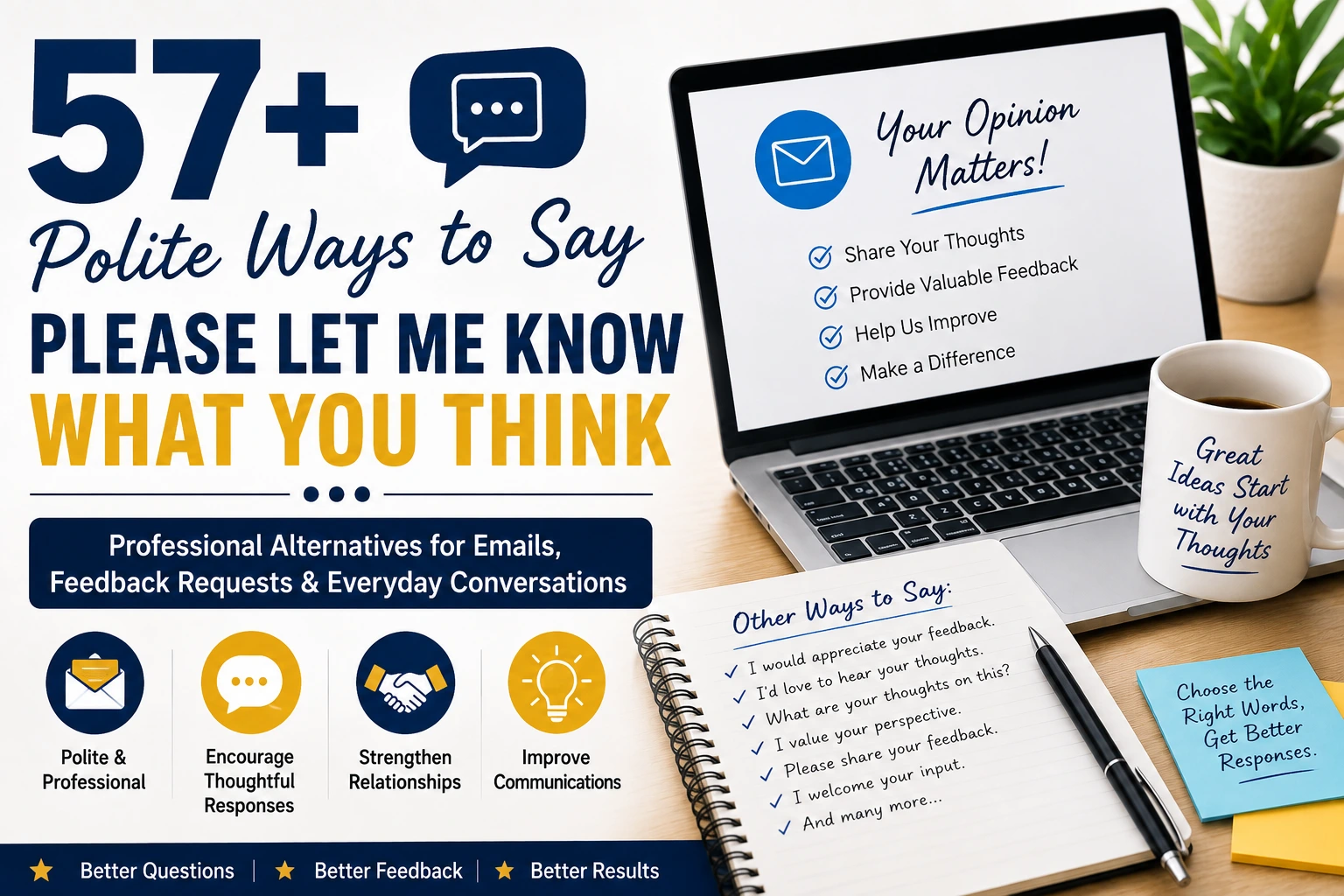
The way you invite someone to share an opinion can shape the entire tone of a conversation. “Please let me know what you think” is a warm, respectful, and widely used expression that encourages feedback without sounding demanding. It works especially well in professional emails, workplace discussions, academic communication, and everyday conversations. However, repeating the same phrase can make your writing feel predictable. Having several thoughtful alternatives allows you to adjust your wording according to the person, situation, and level of formality.
Whether you want constructive feedback from a manager, an opinion from a client, or a casual reaction from a friend, the right expression can make your request feel more natural. These alternatives can also communicate openness, confidence, appreciation, and genuine interest in another person’s perspective. Below, you will find more than 57 polished ways to invite feedback while keeping your communication courteous and engaging.
What Does Polite Ways to Say Please Let Me Know What You Think Mean?
“Please let me know what you think” is a polite way of asking someone to share their opinion, feedback, reaction, or evaluation of something.
For example:
Please let me know what you think about the revised proposal.
The phrase communicates openness and respect. It gives the recipient freedom to respond honestly without creating pressure. Its tone is generally friendly, professional, and approachable.
The expression can be used after sharing an idea, document, proposal, design, presentation, decision, or personal thought. Depending on the context, alternatives can make the request sound more formal, collaborative, warm, confident, or conversational.
For example, “I would appreciate your feedback” sounds more professional, while “I would love to hear your thoughts” feels warmer and more personal.
When to Use It
There are many situations where asking someone for their thoughts is appropriate. The best wording depends on your relationship with the recipient and the type of feedback you want.
In Professional Emails
Use polite feedback phrases when sending proposals, reports, presentations, or workplace documents.
I would appreciate your feedback on the attached proposal.
When Asking a Manager for Feedback
A respectful expression can demonstrate that you value their expertise.
I would welcome your thoughts on this approach.
When Communicating With Clients
Client communication benefits from language that sounds attentive and service oriented.
We would be pleased to hear your thoughts on the proposed design.
In Academic Communication
Students and researchers can use these expressions when requesting feedback on assignments, papers, or research ideas.
I would appreciate your perspective on the methodology.
In Team Discussions
Collaborative language encourages colleagues to participate.
I would be interested to hear everyone’s thoughts before we move forward.
In Casual Conversations
A simpler expression may sound more natural with friends or familiar colleagues.
What do you think about the idea?
In Presentations
Speakers can invite audience participation with an open and respectful request.
I would be interested to hear your thoughts on this proposal.
Is It Polite or Professional?
Yes, “please let me know what you think” is both polite and professional. It is one of the safest expressions to use when requesting feedback because it sounds respectful without being excessively formal.
It is particularly effective in emails because it creates an open invitation rather than demanding an immediate response. However, different situations may call for different levels of formality. For example, “I would appreciate your feedback” sounds more formal, while “I would love to hear your thoughts” sounds warmer.
When communicating with senior professionals or clients, expressions such as “I would value your perspective” or “Your feedback would be greatly appreciated” can sound especially polished. With friends or close colleagues, “What are your thoughts?” or “I would love to know what you think” may feel more natural.
1. I Would Appreciate Your Feedback
Meaning: Politely asks someone to provide their opinion or evaluation.
Tone: Professional, respectful, formal.
I would appreciate your feedback on the revised proposal.
Short Explanation: This is one of the most reliable alternatives for professional communication.
Purpose and Personalization: Use it when you want to sound courteous while clearly requesting useful feedback.
2. I Would Value Your Thoughts
Meaning: Communicates that the recipient’s opinion is important to you.
Tone: Professional, warm, respectful.
I would value your thoughts on the proposed changes.
Short Explanation: This phrase emphasizes the importance of the other person’s perspective.
Purpose and Personalization: It works particularly well when asking an experienced colleague, manager, or client for input.
3. I Would Welcome Your Feedback
Meaning: Expresses openness to receiving someone’s comments or suggestions.
Tone: Professional, inviting, confident.
I would welcome your feedback before we finalize the document.
Short Explanation: The word “welcome” makes the request feel open and collaborative.
Purpose and Personalization: Use it when you genuinely want suggestions or constructive criticism.
4. I Would Love to Hear Your Thoughts
Meaning: Warmly invites someone to share their opinion.
Tone: Friendly, warm, conversational.
I would love to hear your thoughts on the new campaign.
Short Explanation: This is more personal and approachable than a strictly formal request.
Purpose and Personalization: Ideal for colleagues, clients you know well, friends, and creative discussions.
5. I Would Be Interested in Your Perspective
Meaning: Requests someone’s viewpoint or interpretation.
Tone: Formal, thoughtful, professional.
I would be interested in your perspective on this issue.
Short Explanation: This sounds sophisticated and emphasizes the value of the person’s viewpoint.
Purpose and Personalization: Particularly useful when speaking to someone with relevant knowledge or experience.
6. I Would Appreciate Your Thoughts
Meaning: Politely asks someone to share their opinion.
Tone: Professional, courteous, warm.
I would appreciate your thoughts on the proposed schedule.
Short Explanation: This is a natural alternative that works in many professional situations.
Purpose and Personalization: Use it when you want to maintain a friendly yet polished tone.
7. I Would Be Grateful for Your Feedback
Meaning: Expresses sincere appreciation for someone’s input.
Tone: Formal, appreciative, respectful.
I would be grateful for your feedback on the final draft.
Short Explanation: This wording adds a stronger sense of gratitude.
Purpose and Personalization: Best when the recipient is giving valuable time or expertise.
8. Your Feedback Would Be Appreciated
Meaning: Politely communicates that feedback would be welcome.
Tone: Formal, professional, neutral.
Your feedback would be appreciated before the report is submitted.
Short Explanation: This is a polished option for formal workplace correspondence.
Purpose and Personalization: It is especially useful when you want to sound professional and restrained.
9. Your Thoughts Would Be Much Appreciated
Meaning: Indicates that the recipient’s opinion would be valuable.
Tone: Warm, professional, appreciative.
Your thoughts would be much appreciated as we consider the next steps.
Short Explanation: This combines professionalism with a personal sense of appreciation.
Purpose and Personalization: Use it when you want to encourage thoughtful participation.
10. I Welcome Your Thoughts
Meaning: Directly communicates openness to someone’s opinion.
Tone: Professional, confident, inviting.
I welcome your thoughts on how we can improve the process.
Short Explanation: This sounds confident while making the recipient feel encouraged to contribute.
Purpose and Personalization: Excellent for meetings, emails, proposals, and team discussions.
11. I Would Be Glad to Hear Your Thoughts
Meaning: Politely expresses interest in receiving an opinion.
Tone: Friendly, professional, positive.
I would be glad to hear your thoughts on the presentation.
Short Explanation: This sounds warm without becoming overly casual.
Purpose and Personalization: Suitable for colleagues, clients, and professional contacts.
12. I Look Forward to Hearing Your Thoughts
Meaning: Indicates that you expect or hope to receive the person’s opinion.
Tone: Professional, warm, courteous.
I look forward to hearing your thoughts on the proposed changes.
Short Explanation: This creates a positive closing for emails.
Purpose and Personalization: Use it when feedback is expected as part of an ongoing conversation.
13. I Look Forward to Your Feedback
Meaning: Politely expresses anticipation of someone’s feedback.
Tone: Professional, polished, confident.
I look forward to your feedback on the attached report.
Short Explanation: This is a classic professional expression.
Purpose and Personalization: It works particularly well at the end of business emails.
14. I Look Forward to Your Thoughts
Meaning: Invites the recipient to share their opinion.
Tone: Professional, friendly.
I look forward to your thoughts on the proposed strategy.
Short Explanation: This sounds slightly warmer than “I look forward to your feedback.”
Purpose and Personalization: Use it when you want to encourage a genuine opinion rather than only corrections.
15. I Would Welcome Your Perspective
Meaning: Invites someone to offer their personal or professional viewpoint.
Tone: Formal, collaborative.
I would welcome your perspective before we make a final decision.
Short Explanation: This phrase communicates respect for the recipient’s expertise.
Purpose and Personalization: Excellent for managers, mentors, consultants, and subject matter experts.
16. I Would Value Your Perspective
Meaning: Indicates that the recipient’s viewpoint is considered important.
Tone: Formal, respectful, sophisticated.
I would value your perspective on this matter.
Short Explanation: This is a strong choice when seeking insight from an experienced person.
Purpose and Personalization: It creates a respectful and thoughtful tone.
17. I Would Be Interested to Know Your Thoughts
Meaning: Politely expresses curiosity about someone’s opinion.
Tone: Professional, conversational.
I would be interested to know your thoughts on the proposed solution.
Short Explanation: This sounds natural while remaining professional.
Purpose and Personalization: Use it when you want the recipient to feel that their opinion genuinely matters.
18. I Would Be Interested in Hearing Your Views
Meaning: Invites someone to explain their viewpoint.
Tone: Formal, thoughtful.
I would be interested in hearing your views on the proposed policy.
Short Explanation: “Views” gives the phrase a slightly more formal and analytical quality.
Purpose and Personalization: Suitable for professional discussions and formal correspondence.
19. I Would Appreciate Hearing Your Perspective
Meaning: Politely asks someone to share their particular viewpoint.
Tone: Formal, respectful.
I would appreciate hearing your perspective on the matter.
Short Explanation: This combines gratitude with a clear invitation to contribute.
Purpose and Personalization: Particularly useful when requesting advice from someone experienced.
20. Could You Share Your Thoughts?
Meaning: Politely asks someone to provide an opinion.
Tone: Friendly, professional, approachable.
Could you share your thoughts on the revised design?
Short Explanation: This direct question is polite without sounding stiff.
Purpose and Personalization: Great for emails, meetings, and collaborative workplace conversations.
21. Could You Share Your Feedback?
Meaning: Requests comments, suggestions, or evaluation.
Tone: Professional, courteous.
Could you share your feedback on the draft when you have a moment?
Short Explanation: This is clear and practical.
Purpose and Personalization: Use it when you want specific feedback rather than a general reaction.
22. Could You Let Me Know Your Thoughts?
Meaning: Politely asks the recipient to communicate their opinion.
Tone: Friendly, professional.
Could you let me know your thoughts on the suggested changes?
Short Explanation: This retains the familiar meaning of the original phrase while varying the wording.
Purpose and Personalization: Suitable for almost any professional email.
23. May I Have Your Thoughts on This?
Meaning: Respectfully asks someone for their opinion.
Tone: Formal, courteous.
May I have your thoughts on this proposal before we proceed?
Short Explanation: This sounds especially respectful when addressing someone senior.
Purpose and Personalization: Use it when you want to make your request especially considerate.
24. May I Ask for Your Feedback?
Meaning: Politely requests someone’s evaluation.
Tone: Formal, respectful.
May I ask for your feedback on the presentation?
Short Explanation: The question format makes the request feel considerate rather than demanding.
Purpose and Personalization: Appropriate for supervisors, clients, instructors, and professional contacts.
25. Would You Mind Sharing Your Thoughts?
Meaning: Politely asks someone if they would be willing to provide an opinion.
Tone: Very polite, friendly, considerate.
Would you mind sharing your thoughts on the proposed arrangement?
Short Explanation: This is a particularly gentle way to request feedback.
Purpose and Personalization: Useful when you want to avoid sounding demanding.
26. Would You Be Willing to Share Your Feedback?
Meaning: Respectfully asks whether someone would provide feedback.
Tone: Polite, formal, considerate.
Would you be willing to share your feedback on the new process?
Short Explanation: This gives the recipient a sense of choice and autonomy.
Purpose and Personalization: Excellent when requesting feedback from someone who is busy or senior.
27. What Are Your Thoughts on This?
Meaning: Directly asks for someone’s opinion.
Tone: Conversational, professional, open.
What are your thoughts on this approach?
Short Explanation: This is concise and natural.
Purpose and Personalization: Ideal for meetings, instant messages, and familiar workplace conversations.
28. What Is Your Take on This?
Meaning: Asks for someone’s personal interpretation or opinion.
Tone: Friendly, conversational.
What is your take on the proposed changes?
Short Explanation: This is less formal but still appropriate in many professional relationships.
Purpose and Personalization: Best for colleagues and informal discussions.
29. How Do You Feel About This Approach?
Meaning: Asks about someone’s reaction, opinion, or level of comfort with an idea.
Tone: Friendly, thoughtful, conversational.
How do you feel about this approach to the project?
Short Explanation: This invites a more personal response than a purely analytical question.
Purpose and Personalization: Useful when discussing decisions that affect people directly.
30. How Does This Look to You?
Meaning: Asks someone for their overall impression.
Tone: Friendly, conversational.
How does this look to you before I send it to the client?
Short Explanation: This sounds natural and collaborative.
Purpose and Personalization: Ideal for reviewing designs, documents, presentations, or messages.
31. How Does This Strike You?
Meaning: Asks for someone’s immediate impression or reaction.
Tone: Polished, conversational.
How does this proposal strike you?
Short Explanation: This has a slightly sophisticated conversational quality.
Purpose and Personalization: Use it when seeking an instinctive reaction or overall impression.
32. I Would Be Glad to Know Your View
Meaning: Expresses interest in hearing someone’s opinion.
Tone: Formal, warm.
I would be glad to know your view on the matter.
Short Explanation: This is respectful and somewhat traditional.
Purpose and Personalization: Useful in formal correspondence and thoughtful discussions.
33. Your Perspective Would Be Valuable
Meaning: Indicates that someone’s viewpoint could contribute meaningfully to a discussion.
Tone: Professional, appreciative.
Your perspective would be valuable as we evaluate these options.
Short Explanation: This makes the recipient feel that their expertise has genuine importance.
Purpose and Personalization: Excellent for senior colleagues, specialists, and advisors.
34. Your Input Would Be Valuable
Meaning: Communicates that someone’s contribution would be useful.
Tone: Professional, collaborative.
Your input would be valuable before we finalize the project plan.
Short Explanation: This is particularly effective in team settings.
Purpose and Personalization: Use it when you want to encourage active participation.
35. Your Insight Would Be Appreciated
Meaning: Requests informed advice or understanding.
Tone: Formal, respectful, sophisticated.
Your insight would be appreciated as we assess the available options.
Short Explanation: “Insight” implies that the person has knowledge or experience that could improve the decision.
Purpose and Personalization: Ideal for experts, managers, mentors, and experienced colleagues.
36. I Would Appreciate Your Insight
Meaning: Politely asks for knowledgeable advice or interpretation.
Tone: Formal, professional.
I would appreciate your insight into the proposed strategy.
Short Explanation: This is more specific than simply asking for an opinion.
Purpose and Personalization: Use it when the recipient’s expertise is especially relevant.
37. I Would Welcome Any Thoughts You May Have
Meaning: Invites the recipient to share any observations or opinions.
Tone: Warm, professional, open.
I would welcome any thoughts you may have regarding the proposal.
Short Explanation: This makes the request feel flexible and non demanding.
Purpose and Personalization: Good when you are open to a wide range of feedback.
38. I Would Welcome Any Feedback You May Have
Meaning: Encourages the recipient to provide comments or suggestions.
Tone: Professional, approachable.
I would welcome any feedback you may have before we finalize the document.
Short Explanation: This sounds collaborative and receptive.
Purpose and Personalization: Useful for reviews, drafts, proposals, and workplace projects.
39. Any Feedback Would Be Greatly Appreciated
Meaning: Politely communicates gratitude for any feedback received.
Tone: Warm, professional, appreciative.
Any feedback would be greatly appreciated as we refine the final version.
Short Explanation: This is especially useful when you are open to both major and minor suggestions.
Purpose and Personalization: It creates a welcoming atmosphere around feedback.
40. I Am Keen to Hear Your Thoughts
Meaning: Expresses genuine enthusiasm about receiving an opinion.
Tone: Friendly, positive, professional.
I am keen to hear your thoughts on the proposed campaign.
Short Explanation: This communicates enthusiasm without becoming overly casual.
Purpose and Personalization: Useful in collaborative and creative professional settings.
41. I Am Interested in Your Feedback
Meaning: Clearly communicates that someone’s feedback is wanted.
Tone: Professional, neutral.
I am interested in your feedback on the revised process.
Short Explanation: This is direct and easy to understand.
Purpose and Personalization: Suitable when you want a straightforward professional expression.
42. I Am Eager to Hear Your Thoughts
Meaning: Shows strong interest in receiving someone’s opinion.
Tone: Enthusiastic, warm, professional.
I am eager to hear your thoughts on the new proposal.
Short Explanation: This adds energy and enthusiasm to a feedback request.
Purpose and Personalization: Best when the discussion is collaborative or creative.
43. I Would Be Delighted to Hear Your Thoughts
Meaning: Warmly communicates that you would appreciate someone’s opinion.
Tone: Warm, polished, gracious.
I would be delighted to hear your thoughts on the final design.
Short Explanation: This sounds more personable than standard corporate wording.
Purpose and Personalization: Useful when you want your communication to feel welcoming and positive.
44. I Would Be Pleased to Hear Your Views
Meaning: Expresses polite interest in someone’s opinion.
Tone: Formal, courteous.
I would be pleased to hear your views on this proposal.
Short Explanation: This has a refined professional tone.
Purpose and Personalization: Appropriate for formal correspondence and senior professional relationships.
45. I Would Be Interested in Any Observations You May Have
Meaning: Invites comments, concerns, or observations.
Tone: Formal, thoughtful.
I would be interested in any observations you may have regarding the report.
Short Explanation: This gives the recipient freedom to comment on details they find important.
Purpose and Personalization: Excellent for document reviews and analytical work.
46. Please Share Your Perspective When Convenient
Meaning: Politely invites an opinion while respecting the recipient’s schedule.
Tone: Professional, considerate.
Please share your perspective when convenient so we can consider the next steps.
Short Explanation: This avoids putting unnecessary pressure on the recipient.
Purpose and Personalization: Particularly useful when communicating with busy professionals.
47. When You Have a Moment, I Would Appreciate Your Thoughts
Meaning: Requests feedback while acknowledging that the recipient may be busy.
Tone: Warm, considerate, professional.
When you have a moment, I would appreciate your thoughts on the attached proposal.
Short Explanation: This is a tactful way to request feedback without demanding immediate attention.
Purpose and Personalization: Ideal for workplace emails.
48. I Would Be Grateful to Know Your Opinion
Meaning: Respectfully asks for someone’s personal judgment.
Tone: Formal, appreciative.
I would be grateful to know your opinion before we proceed.
Short Explanation: This wording adds sincerity and respect.
Purpose and Personalization: Best when the recipient’s judgment is especially valuable.
49. I Would Appreciate Knowing Your View
Meaning: Politely requests a person’s perspective.
Tone: Formal, professional.
I would appreciate knowing your view on the proposed arrangement.
Short Explanation: This is concise while maintaining a courteous tone.
Purpose and Personalization: Suitable for business correspondence and formal discussions.
50. Your Opinion Would Be Very Helpful
Meaning: Communicates that someone’s opinion could assist with a decision.
Tone: Friendly, appreciative, professional.
Your opinion would be very helpful as we evaluate these options.
Short Explanation: This makes the recipient feel that their input has a practical purpose.
Purpose and Personalization: Excellent for collaborative decision making.
51. Your Thoughts Could Help Us Move Forward
Meaning: Explains that feedback will contribute to progress.
Tone: Collaborative, professional, encouraging.
Your thoughts could help us move forward with the next stage of the project.
Short Explanation: This connects the recipient’s opinion with a meaningful outcome.
Purpose and Personalization: Useful when encouraging team participation.
52. Your Feedback Would Help Us Refine This
Meaning: Explains that feedback will improve an existing idea or document.
Tone: Collaborative, professional.
Your feedback would help us refine this proposal before submission.
Short Explanation: This gives the recipient a clear reason for providing feedback.
Purpose and Personalization: Particularly useful during review and editing processes.
53. I Would Appreciate Any Suggestions You May Have
Meaning: Politely invites recommendations for improvement.
Tone: Professional, open, respectful.
I would appreciate any suggestions you may have regarding the proposed workflow.
Short Explanation: This is more specific than asking for general thoughts.
Purpose and Personalization: Use it when you actively want practical recommendations.
54. I Would Welcome Your Suggestions
Meaning: Invites the recipient to recommend improvements or alternatives.
Tone: Professional, collaborative.
I would welcome your suggestions before we finalize the plan.
Short Explanation: This encourages constructive participation.
Purpose and Personalization: Excellent for team projects and creative work.
55. I Would Appreciate Your Honest Opinion
Meaning: Politely encourages sincere and candid feedback.
Tone: Respectful, direct, personal.
I would appreciate your honest opinion on whether the proposal is clear enough.
Short Explanation: This explicitly communicates that you are comfortable receiving criticism.
Purpose and Personalization: Use it when genuine honesty is more valuable than simple approval.
56. I Would Be Grateful for Your Honest Feedback
Meaning: Requests sincere evaluation while expressing appreciation.
Tone: Formal, sincere, respectful.
I would be grateful for your honest feedback on the draft.
Short Explanation: This creates an atmosphere where constructive criticism is encouraged.
Purpose and Personalization: Particularly useful when asking a mentor, manager, or trusted colleague for review.
57. I Would Appreciate Your Candid Thoughts
Meaning: Politely asks someone to give an honest and straightforward opinion.
Tone: Professional, sincere, confident.
I would appreciate your candid thoughts on the proposed strategy.
Short Explanation: “Candid” signals that you value honest feedback rather than simple agreement.
Purpose and Personalization: Use it when you genuinely want an unfiltered professional opinion.
58. Please Feel Free to Share Your Thoughts
Meaning: Gives someone permission and encouragement to express an opinion.
Tone: Friendly, welcoming, professional.
Please feel free to share your thoughts on the revised document.
Short Explanation: This makes feedback feel voluntary and comfortable.
Purpose and Personalization: Excellent when you want to create an open communication environment.
59. I Would Be Glad to Receive Your Feedback
Meaning: Expresses willingness to receive comments or suggestions.
Tone: Professional, warm, courteous.
I would be glad to receive your feedback before the final submission.
Short Explanation: This communicates openness without creating pressure.
Purpose and Personalization: Suitable for professional correspondence and collaborative projects.
60. Please Share Any Thoughts You Have
Meaning: Invites the recipient to provide any opinion or reaction they may have.
Tone: Friendly, open, conversational.
Please share any thoughts you have after reviewing the proposal.
Short Explanation: This is simple, natural, and welcoming.
Purpose and Personalization: Use it when you want to encourage spontaneous feedback.
How to Choose the Best Alternative
For Formal Business Emails
Choose “I would appreciate your feedback,” “I would welcome your perspective,” “Your insight would be appreciated,” or “I would value your perspective.”
These expressions sound polished and respectful when communicating with clients, managers, executives, or external partners.
For Friendly Workplace Communication
Try “I would love to hear your thoughts,” “Could you share your thoughts?” or “I would welcome any thoughts you may have.”
These options maintain professionalism while sounding approachable.
When You Need Honest Feedback
Use “I would appreciate your honest opinion,” “I would be grateful for your honest feedback,” or “I would appreciate your candid thoughts.”
These expressions clearly communicate that constructive criticism is welcome.
When You Want Specific Suggestions
Choose “I would appreciate any suggestions you may have,” “I would welcome your suggestions,” or “Your feedback would help us refine this.”
These phrases make it easier for the recipient to understand what type of response you need.
When You Want to Avoid Pressure
Use “Please feel free to share your thoughts,” “Please share your perspective when convenient,” or “When you have a moment, I would appreciate your thoughts.”
These alternatives respect the recipient’s time and make the request feel considerate.
Conclusion
Knowing different ways to say “please let me know what you think” can make your communication more flexible, thoughtful, and effective. While the original phrase is already polite and professional, alternatives such as “I would appreciate your feedback,” “I would value your perspective,” “I would welcome your thoughts,” and “Please feel free to share your thoughts” allow you to match your language to the situation. The key is to choose an expression that feels natural for your audience and purpose. By varying your wording thoughtfully, you can encourage honest feedback, strengthen professional relationships, and make your messages sound more polished and personable.
Discover more
professional alternatives to it was nice talking to you